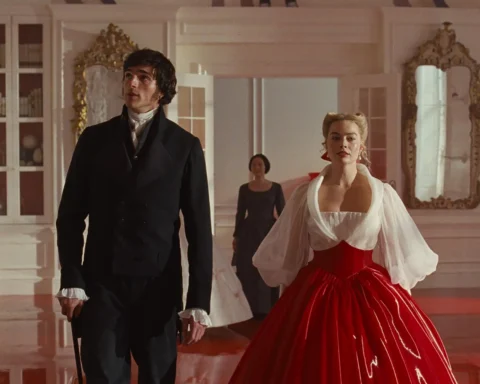
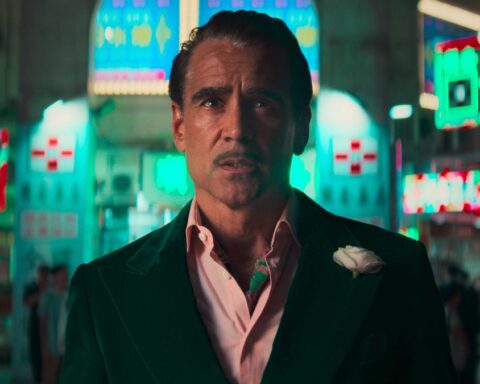
In Kogonada’s first two movies, seen in Columbus and After Yang, he defies the conventional narrative approach for the respective coming-of-age and sci-fi stories in favor of subverting the expectations by internalizing his recurring themes of grief, memory and acceptance. Neither of his movies were exactly accessible in a traditional sense. Casual audiences might easily dismiss them as either boring or pretentious or even the combination of both, particularly since Kogonada’s quiet and contemplative filmmaking style can be a test of patience. And yet, if one is willing to look deeper, his movies have the directorial nuances that delve into the thoughtful character studies, complemented with a distinct visual style and understated acting performances.
His supposedly long-awaited third movie, A Big Bold Beautiful Journey, which pairs Margot Robbie and After Yang’s Colin Farrell, seems destined to be another critically acclaimed hit. Three for three? Well, I wish that would be the case because after spending an excruciating 109 minutes, it sure felt like an eternity staring on the big screen wondering what got into Kogonada’s mind when he directed his latest movie. Written by Seth Reiss, the same person who co-wrote Mark Mylod’s eclectic blend of culinary horror and pitch-black comedy The Menu, the movie opens promisingly during the first act. It begins with David (Colin Farrell) leaving his home to attend his friend’s wedding, only to find his car has been clamped on the roadside.
But lucky for him, he notices a small ad on the wall that reads “The Car Rental Agency”, prompting him to head over there since he needs a car in a hurry. Except that the so-called agency looks curiously empty on the inside, with a man and a woman played by Kevin Kline and Phoebe Waller-Bridge sitting at the desk placed right in the middle. The latter particularly sports a bizarre German accent. They offer him a car that is supposedly out of production: an old ‘90s Saturn. Not to mention Bridge’s character insists that he must add on the GPS, despite David’s phone already has a built-in navigation system.
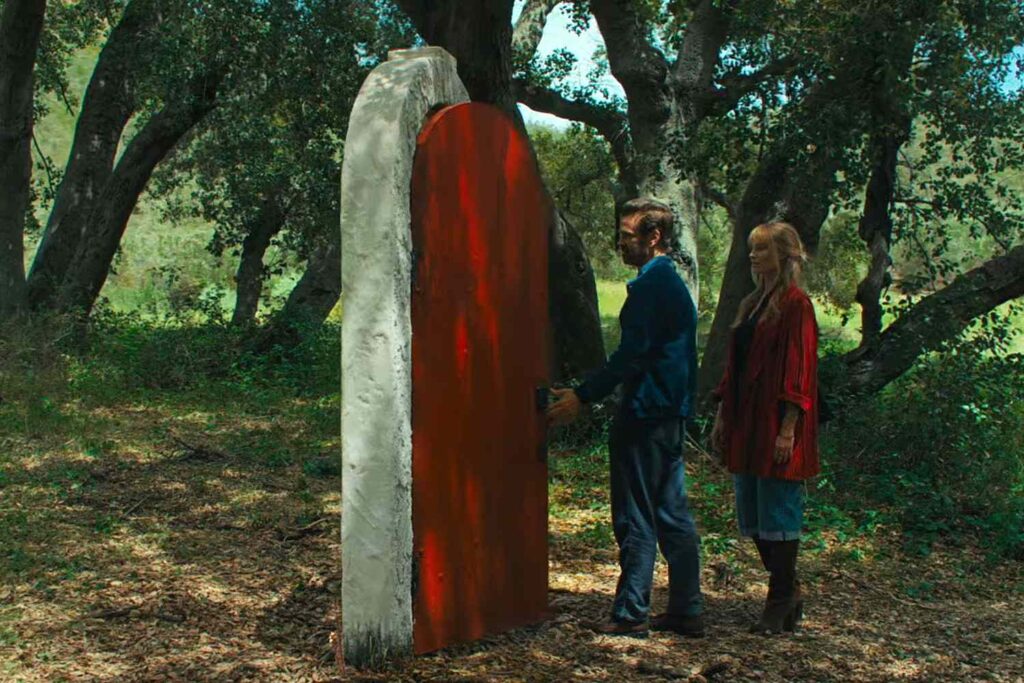
So far, so good. He reaches his destination and from there, it’s a meet-cute moment with a woman named Sarah (Margot Robbie) during the wedding. It starts with an awkward verbal exchange before gradually flirting with each other. Fate, coincidence or whatever you want to call them unite the two strangers again, this time at a fast-food joint. Soon, the titular journey begins when David and Sarah agree to let the somewhat mystical GPS guide them to one destination after another. This leads them to a door in the middle of the woods. All they need to do is open the door and step inside. These doors in question are like a gateway to revisiting about their respective pasts.
Case in point: An extended, wonderful sequence, which sees David and Sarah enter the former’s high-school era before culminating in a musical sequence on stage, showcasing Farrell’s energetic song-and-dance moment. Credits go to Kogonada for his stunning visuals, emphasizing heavily in primary colors from Sarah’s striking red coat to the bright yellow umbrellas. He is also backed by Joe Hisaishi’s dreamy score and Benjamin Loeb’s beautifully atmospheric cinematography, notably with the latter’s way of capturing the movie’s predominantly rain-slicked landscape. Farrell and Robbie are an attractive on-screen couple, and while they have their moments together, A Big Bold Beautiful Journey ultimately bores me more than immersing into their so-called magical adventure.
Kogonada tries to be offbeat on one side and meditative on the other, but instead of complementing each other, his movie comes across as tonally inconsistent. I hate to say this, but it barely works as a romantic comedy or drama with the fickle-minded, will-they-or-won’t-they (David and Sarah, that is) end up together by the time the movie reaches its conclusion, which feels frustrating. We learn that the two are afraid of committing to each other, and their door-to-door journey is supposed to offer them a chance to overcome whatever emotions they have experienced in their personal lives.
But the problem is that for a movie with such a title, one might be expecting something profound and remarkable here. Sure, Kogonada did a good job subverting genre conventions in his first two movies, and he attempts to repeat the same feat, this time within the movie’s romantic-fantasy mold. Too bad his ill-advised pensive direction sucks the life out of the movie, leaving nothing but a hollow shell of high-concept ideas that don’t gel well together. I must admit it’s a chore to sit through, as the movie grows increasingly dull while the story progresses. And the frequently dreary pace doesn’t help either.
Given its promising setup and the caliber of Colin Farrell and Margot Robbie, the two certainly deserve better than what they are given here. The most disappointing of all is Kogonada, who unexpectedly hits rock-bottom with A Big Bold Beautiful Journey.