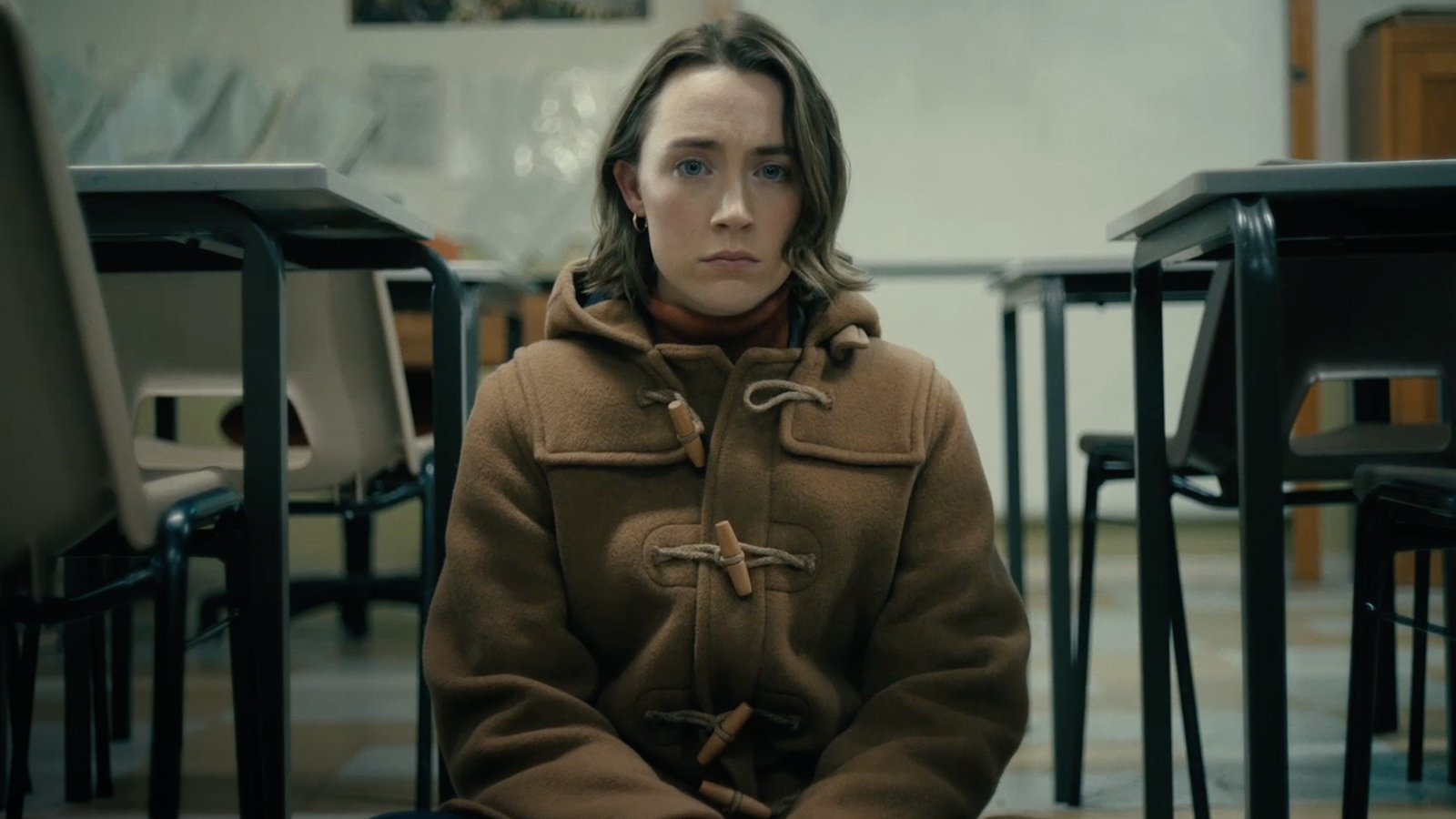
The saying goes that one bad apple can spoil the whole bunch, and for primary school teacher Maria, that bad apple happens to be her troubled student named Danny (Eddie Waller). Directed by Jonatan Etzler (One More Time) and starring Saoirse Ronan (Lady Bird), Bad Apples sees Maria struggling to control the increasingly disruptive Danny, whose behaviour begins to impact both his classmates and her career. As Maria reaches breaking point, a terrible decision sends the situation spiralling wildly out of control, raising some increasingly uncomfortable questions about just how far someone is willing to go for the greater good. Wickedly funny, morally complex and led by another fantastic performance from Ronan, Bad Apples is a delicious dark comedy that turns an outrageous situation into something surprisingly thought-provoking.
That aforementioned familiar saying about bad apples opens the door to some fascinating questions, ensuring Etzler’s film remains thematically rich from beginning to end. From the outset, Danny’s behaviour has a tangible impact on everyone around him: lessons are constantly interrupted, his classmates struggle to concentrate and Maria spends so much time attempting to control one pupil that the others inevitably suffer. More importantly, Danny isn’t merely naughty or irritating; his increasingly dangerous behaviour pushes Maria far beyond breaking point. Bad Apples thrives because it dares to ask what happens once he is removed from the equation. Maria becomes a better teacher, her class begins to thrive and the positive effects gradually spread throughout the wider school, creating an uncomfortable argument that becomes increasingly difficult to ignore. Questions surrounding the greater good and whether the needs of the many can ever justify sacrificing the wellbeing of one person consequently sit at the heart of the story. Rather than providing easy answers, Bad Apples leaves its audience to wrestle with the morality of a situation where doing something unquestionably wrong appears to produce overwhelmingly positive results.
Interestingly, Etzler’s film refuses to pin all the blame on Danny, or even Maria, despite the horrifying decision she ultimately makes. Instead, Bad Apples digs deeper into how the situation was allowed to reach such an extreme point, and whether something could have been done to prevent it. Maria has repeatedly raised concerns about Danny’s behaviour with the head teacher, only to discover that a lack of funding, resources and additional support leaves the school with few options to actually help either of them. Danny’s father is similarly brought into discussions, but his demanding work schedule and relative absence from his son’s daily life prevent him from fully being able to combat the bad behaviour. The film consequently widens its scope beyond one troublesome child and an increasingly desperate teacher, examining the institutional and parental failures surrounding them without offering one convenient person to blame. Bad Apples isn’t simply interested in the damage one rotten apple can cause; it asks how that apple became rotten in the first place, and what happens when those around it are gradually allowed to spoil too.
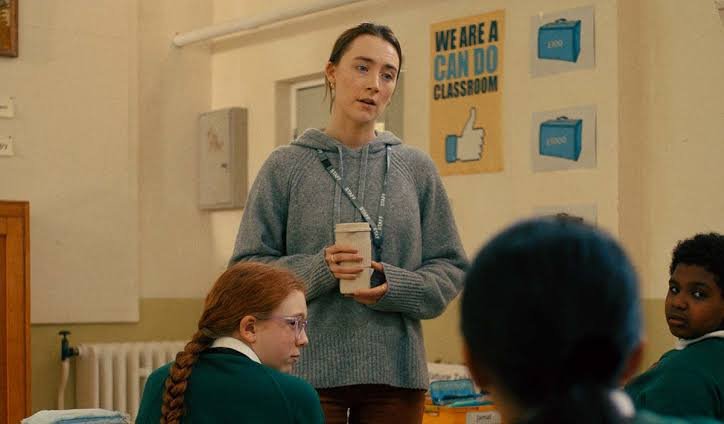
All of this may sound extraordinarily heavy, and at times it is, but Bad Apples is also a wickedly effective satire that proves as hilarious as it is uncomfortable. This isn’t necessarily the broad, laugh-out-loud comedy destined to have packed Friday-night crowds roaring in unison; instead, Etzler finds humour in awkwardness, absurdity and those moments that produce a nervous chuckle before making you question whether you should be laughing at all. Considering the increasingly dark direction Maria’s situation takes, maintaining that balance is no easy task, yet the comedy avoids undermining the seriousness of what the film has to say. If anything, the two work surprisingly well in tandem, with the absurdity highlighting just how far circumstances have spiralled whilst offering some welcome respite from the weightier ideas being explored. Bad Apples may leave you squirming in your seat, but there’s a good chance you’ll be laughing while you do it.
As always, Ronan is an absolute revelation. It’s rare to see the actress explore quite such a dark side, yet she handles every facet of Maria with expected brilliance, equally believable as a warm and encouraging teacher, an emotionally exhausted woman and, occasionally, someone capable of genuinely dangerous behaviour. It’s another impressive turn to add to an already remarkable roster, but perhaps more surprising is just how confidently the film’s young cast hold their own alongside their considerably more experienced co-stars. Eddie Waller naturally stands out as troublemaker Danny, a demanding role that puts the young performer through his paces almost as much as his character does everyone around him. Whether breaking down during an emotional struggle or challenging those around him with a mischievous yet potentially violent glint in his eye, Waller is a marvel. Nia Brown is similarly excellent as Pauline, delivering a memorable performance in a role responsible for several of those aforementioned awkward squirms. With such committed performances across the board, the cast embrace every uncomfortable, emotional and increasingly outrageous turn the screenplay throws their way.
Bad Apples isn’t quite without its faults, with even its committed satire occasionally pushing ideas to such extremes that credibility begins to waver, particularly during an increasingly outrageous third act. Nevertheless, Etzler delivers a sharply written and impressively made dark comedy, expertly balancing uncomfortable humour with weighty moral questions and plenty of emotional substance. Ronan is predictably excellent, while a remarkably strong young cast ensures she is far from the only performance worth celebrating. Bold, provocative and frequently hilarious, Bad Apples is well worth taking a bite out of.