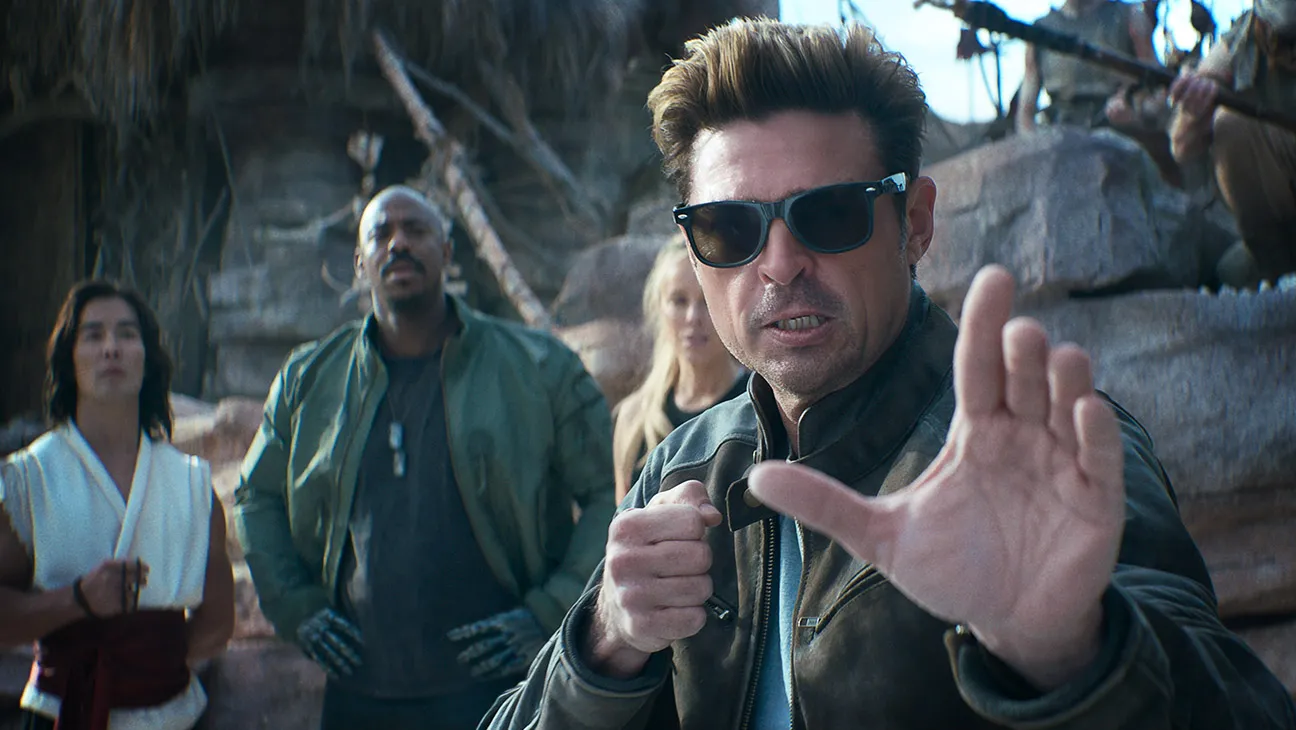
It’s been five years since this video game-adapted franchise was revived, and although Mortal Kombat may not have impressed critics or succeeded at the box office due to the unfortunate timing of release, fans have been eager to see what comes next regardless. This time, the fan favorite champions – now joined by Johnny Cage (Karl Urban) himself – are pitted against one another in the ultimate, no holds barred, gory battle to defeat the dark rule of Shao Khan that threatens the very existence of the Earthrealm and its defenders. Whilst Mortal Kombat II may provide some entertaining action set in a vibrant world, the messy narrative, clunky editing and lack of stakes prevents it from packing a knock-out punch.
In true sequel fashion, Mortal Kombat II has more of everything; protagonists, villains, locations, fight sequences and lore. Proving that more doesn’t always mean better, the film unfortunately feels over-stuffed and lacking in focus. The first film did a good job setting up a likeable lead in Cole Young, played well by Lewis Tan (Deadpool 2), but here he’s sidelined for a new character to take center stage – Kitana (Adeline Rudolph). Whilst there’s certainly some heart to her story and Rudolph puts in a good enough turn, the shift feels jarring and the arc we were invested in is no longer. The movie isn’t just building up Kitana as a central figure, but fan favorite Johnny Cage, introduced to the big screen by Karl Urban (The Boys). Whilst Urban certainly has charisma and screen presence, the poor accent work is extremely distracting, and the character is mostly reduced to a comedy crutch that only pulls off a handful of jokes. A very similar approach is taken with our villain – whilst Shang Tsung (Chin Han) is still somewhat present after the end of the first instalment teasing he had bigger things to come, he is shafted by not one but two extra baddies. This diminishes both his screen time and his menacing presence he boasted in the 2021 flick. By introducing a plethora of new characters, especially leading protagonists and villains, the focus is almost altogether lost.
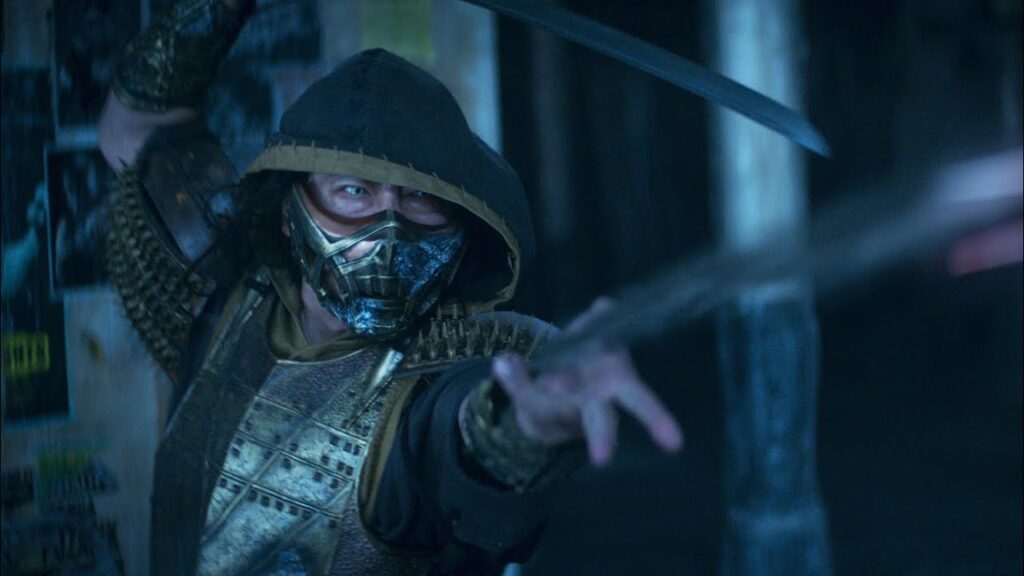
The saving grace with Mortal Kombat II is expectedly the fight sequences. Similarly to the first movie there are plenty of them, and they’re filtered throughout the entire run-time evenly to create an entertaining viewing experience. The martial arts scenes are easily the highlights, being both well framed and beautifully choreographed. Due to the essence of the tournament at the centre of our plot, there are often multiple fight scenes occurring at once. This means we get to experience a range of different fighting styles, locations in which the fights take place, and battles between multiple different characters who are paired up with different enemies throughout. This certainly keeps things fresh and interesting, ensuring no scuffle is the same as the last. The violence from the video games and thus this films predecessor is intact, with those who enjoy a little bloodshed likely to be happy with the mean spirited kills. If you’re buying your cinema ticket purely to be entertained by fast-paced, high energy fight sequences, as most viewers are, you’re likely to be satisfied with this portion at least.
As solid as these fight scenes are, there are a couple of issues here that prevent even the movies strongest asset from hitting a home run. As mentioned, we are often experiencing two fights at the same time, as our team is split to fight their own battles and take down the enemies one by one. Instead of letting us sit with one well choreographed and high intensity fight scene, they are spliced together, frequently flinging us back and forth between them. Unfortunately, this prevents us from feeling the stakes and becoming fully immersed in what’s happening in front of us. As soon as the fight kicks into gear and a life is at stake, we’re thrown into another location. Speaking of stakes, it’s hard to feel them at all when one fundamental piece of lore is introduced – characters can be resurrected. Due to the franchises use of Hell, and our cast of characters now including a necromancer played by Damon Herman (Once Upon a Time… In Hollywood), characters that meet their demise are often brought back in later scenes. Even characters from the 2021 movie are re-introduced, even if they’re not quite the same as they were prior. It’s hard to feel the emotion and root for the survival of our cast when we know they are likely to come back, whatever their fate.
With a misguided story that lacks both stakes and an obvious through-line due to an onslaught of new characters, Mortal Kombat II feels less focused than its predecessor and therefore a lot messier. The martial arts, use of special fighting powers and multiple unique locations is certainly intriguing and sporadically entertaining, but when bogged down with cringeworthy one-liners, a poorly used Karl Urban and choppy editing that doesn’t let you sit with the characters or events, even those highlights can’t save it. The weak CGI that’s somehow worse than what we received in 2021 is the nail in the coffin.