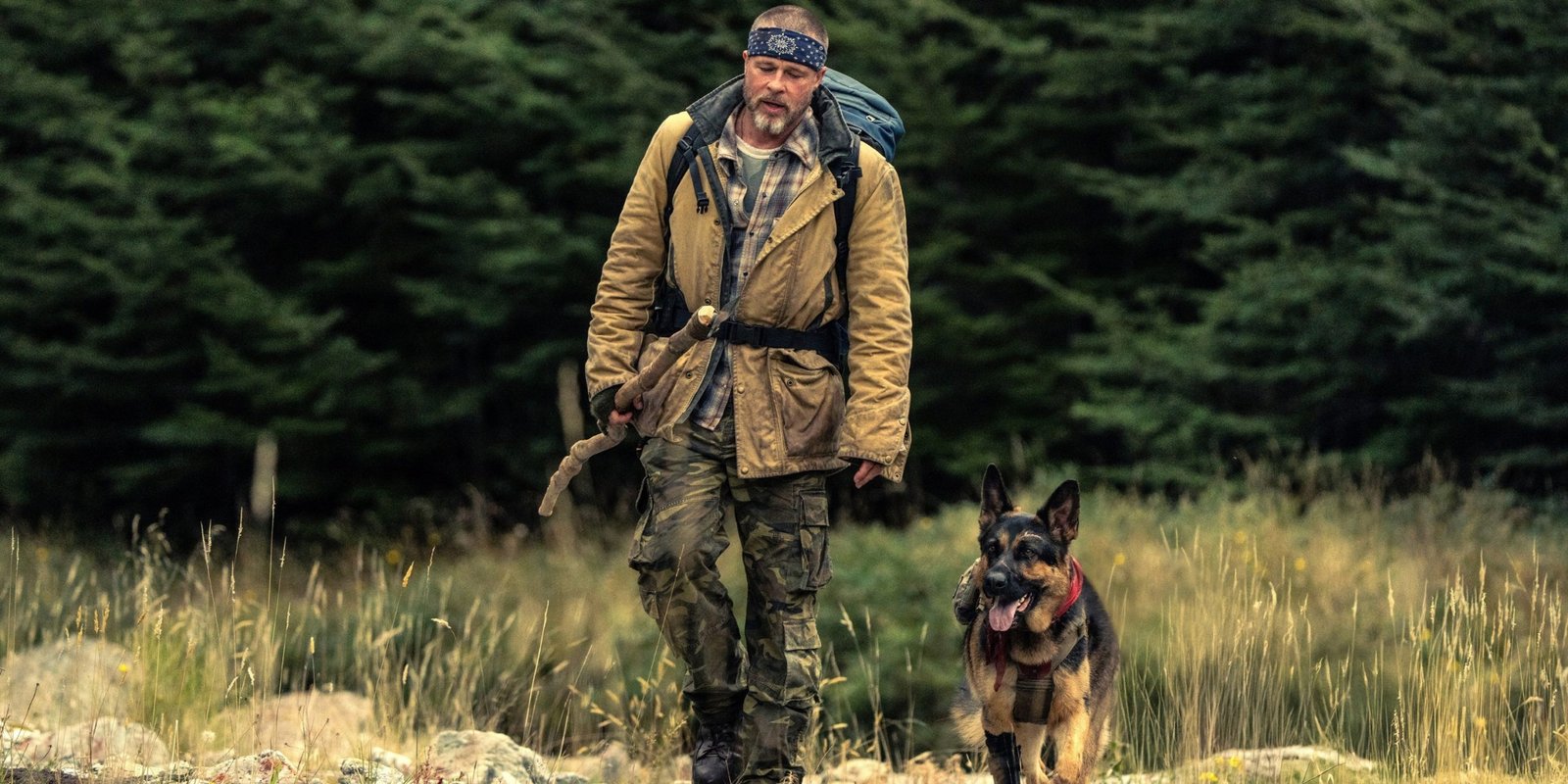
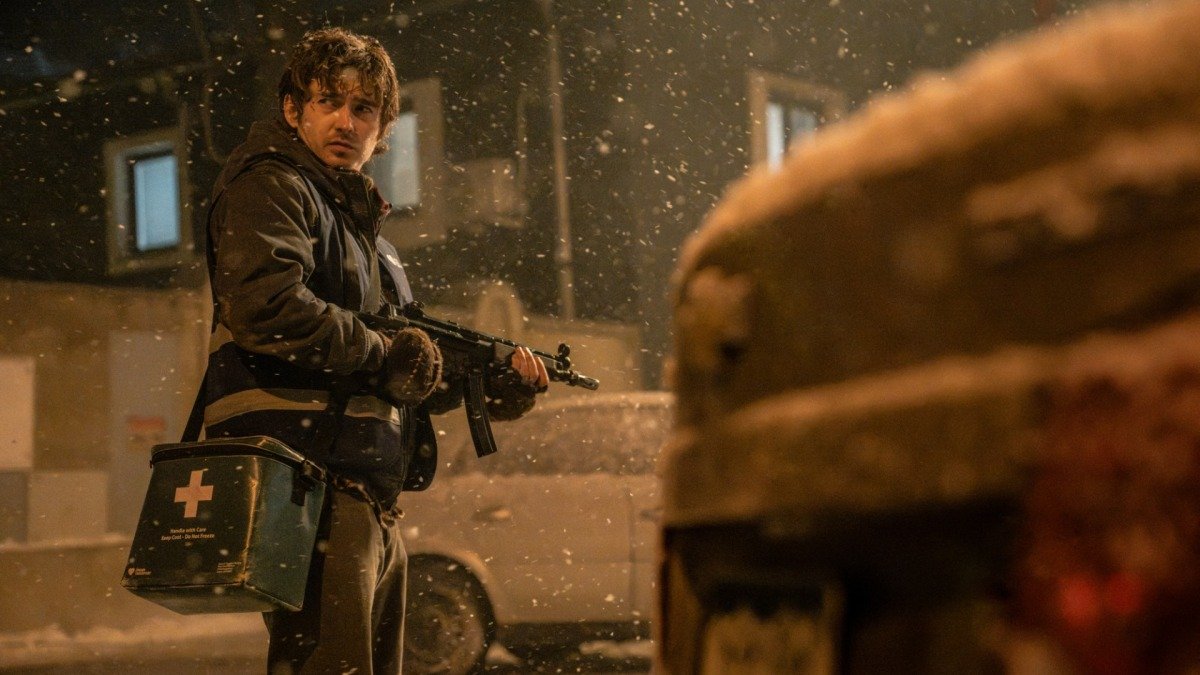
A two-hander poses a real challenge that can make or break a movie since it relies entirely on the emotional and narrative strength of the character dynamics to sustain one’s interest. Such a case is Heart of the Beast, written by first-time film writer Cameron Alexander, which focuses mainly on James Belmont (Brad Pitt) and his beloved German Shepherd, Odin (Uber, the principal dog star among three other German Shepherds). Save for the deliberate first act, where we see James and Odin meet a grizzled old man, played by J.K. Simmons, who made quite an impression in his small role, in the Alaskan wilderness.
Simmons’s ex-miner character marks the only time that James has a proper human interaction, probably since retiring from Special Forces. We get a brief backstory about James and combat-scouting Odin, who both went through hell during active military duties. They suffer from PTSD, while Odin’s loss of his leg requires the canine to wear a prosthetic. With the added exception of Anne Lambe‘s kind stranger in a pickup truck that bookends the movie, the story zeroes in on how James and Odin’s otherwise solitary life living off the grid together turns into a disaster, particularly after a minor heart attack causes him to lose consciousness mid-flight while flying his Cessna seaplane.
This leads to a plane crash, but they are somehow alive. The injured James manages to salvage whatever items from the sunken plane in the river, including a bottle of aspirin that he pops a few now and then to ease his recurring pain. And after studying the map, he and Odin must endure a long, treacherous 58-mile trek across the wilderness to reach safety. Frankly, I’m surprised that David Ayer is on board to direct a movie that’s minimalist in its narrative-driven storytelling but more of a visually heavy approach, especially given his primary filmography leaning towards ensemble-based films like Street Kings and Sabotage.
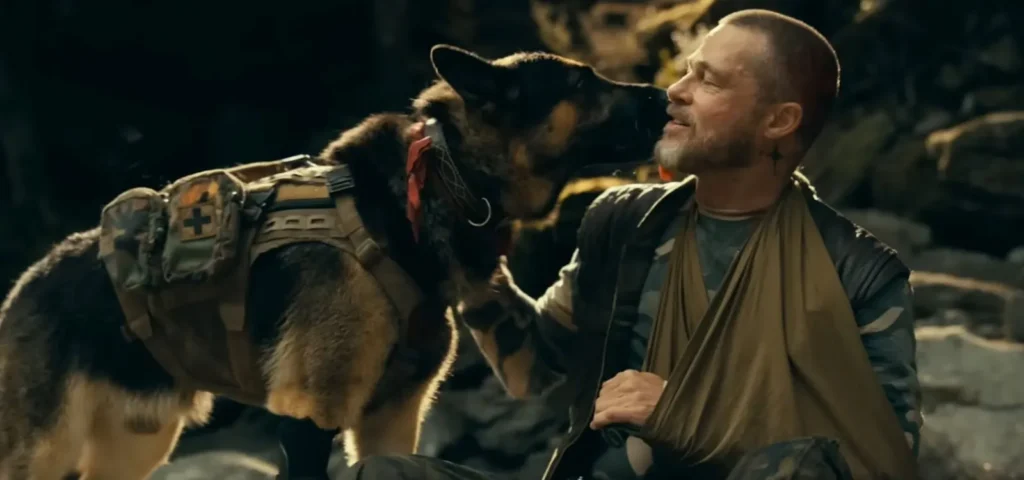
Even the dialogue isn’t dense, favoring facial expressions and gestures instead, and I’m glad Pitt and the dog Uber excel in their roles. They share a remarkably lived-in bond as if the two have been together for a long time, despite the movie skipping the narrative formality in showing us the detail on how James and Odin’s handler-and-a-dog relationship is first started. And while it does showcase that moment in the form of a voiceover-filled flashback at the end of the movie, Ayer only shows what we need to know basis without overwhelming the movie’s core survival story. No doubt the on-screen chemistry keeps me engaged throughout the movie, and it helps that the 101-minute runtime is confidently paced.
Individually speaking, Pitt’s predominantly one-man show effectively combines his usual effortless charm with a mix of weathered yet laconic personality and a soulful center, while Uber displays a deep affection for a canine actor through evocative eyes and body posture that almost steal the show. Ayer is equally committed to practical filmmaking by shooting his movie on location in New Zealand, which serves as a gorgeously rugged stand-in for the Alaskan wilderness. With Mauro Fiore in charge of the cinematography, his lensing successfully captures both the majestic beauty of its landscape and the heart of the peril. Ayer’s directorial prowess in gritty action set pieces is put to good use, highlighting the genuine stakes, such as a scene where James and Odin attempt to cross over the ravine on a wobbly, bridge-like tree trunk before a subsequent fall into the white-water rapids. But the way Ayer tries to ratchet up the tension by having the two encounter a grizzly bear and a pack of wolves on separate occasions nearly breaks my immersion while watching the movie. This is especially true with the somewhat shoddy CGI that doesn’t blend well with the tactility of its real environment and the actors.
Still, I find myself intrigued by the overall cinematic experience, despite its shortcomings. Coupled with the heartfelt third act that shows how far James and Odin’s journey has culminated in the end, Heart of the Beast is easily Ayer’s best movie in a long while.