In Anshul Tiwari’s Bayaar, we are ushered into a spiritual odyssey that contemplates life’s impermanence and the soul’s elusive search for redemption. Drawing from the existential architecture of Jean-Paul Sartre’s Huis Clos, the film unfolds less as a conventional narrative than as a purgatorial reckoning, where its characters are trapped not by walls but by memory itself. The three principal characters understand their fate as the sum of their past actions. They attempt to justify their existence through retrospective self-examination, clinging to fragments of experience in the hope of moral coherence.
When their vehicle breaks down in the mountains, three friends — Sreemoi, Sam and Beersha — seek shelter in the remote Shiv Shakti Lodge, believing it to be a temporary refuge. Presided over by its enigmatic caretakers, Ved and Malki, the lodge gradually reveals itself as more than a roadside sanctuary, as other travellers arrive and pause there before continuing their passage into Bayoul which is a divine realm of spiritual liberation. As time unfolds, the three friends begin to uncover the lodge’s unsettling mysteries and the strange behaviour of its guardians. What begins as shelter soon becomes a confrontation with an inescapable reality, forcing them to hold on desperately to what remains of lives already gone before they can surrender to truth and make peace with their fate.
In its first few minutes, Bayaar gives the impression of being a cabin-in-the-woods horror film, unfolding within the familiar design of isolation, mystery and impending dread. But as the narrative progresses, it reveals far more metaphysical ambitions. As buried sins, regrets and unresolved truths begin to surface, each character is forced to confront the illusions that once sustained them. Yet the narrative is ultimately concerned less with external terror than with the paralysis of self-consciousness itself. It presents existence as a kind of living death, where one is imprisoned by the ceaseless anxiety of judgment by others, by oneself, and by the past that cannot be revised. The film’s spiritual dimension emerges not through transcendence alone, but through its unsettling recognition that redemption may lie less in rewriting one’s history than in confronting the futility of that desire. Here the burden of existence is not simply to live, but to endure the unbearable weight of evaluation in a state where change itself may no longer be possible.
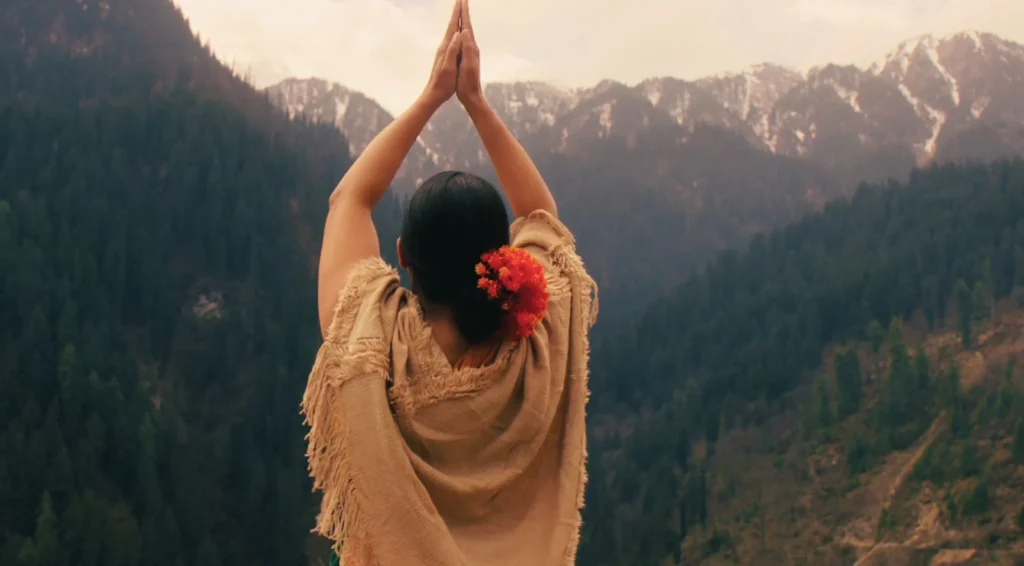
Set against the vast, forbidding expanse of the Himalayan mountains, Bayaar uses its setting not merely as atmosphere but as a profound existential device. Removed from the speed, noise and moral distractions of urban life, the characters are placed in a landscape of seclusion that strips them of the identities and comforts they have long relied upon. The mountains, with their austere grandeur and indifferent permanence, create a space where civilisation’s reassuring structures fall away, leaving the three friends suspended in an isolation that is at once physical, psychological and spiritual. In this remote terrain, they are forced to confront the fault lines in their lives, the buried guilt, self-deceptions and unresolved wounds that the routines of ordinary existence often allow one to suppress. The natural world here does not offer solace so much as exposure. Its silence becomes accusatory, compelling introspection; its vastness renders human evasions insignificant. What emerges is a setting that functions almost as a purgatorial threshold, severing the characters from urbanity in order to examine who they are beneath the social performances they inhabit. The isolation also reinforces the film’s larger spiritual inquiry, where redemption may require a radical detachment from the familiar frameworks through which one has justified one’s life. In confronting the enormity of both nature and mortality, the characters are not simply surviving a secluded ordeal, but undergoing a reckoning with the fragile narratives they have constructed about themselves. The mountains thus become a crucible place where the external journey toward Bayoul mirrors an internal passage through guilt, judgment and, perhaps, the possibility of liberation.
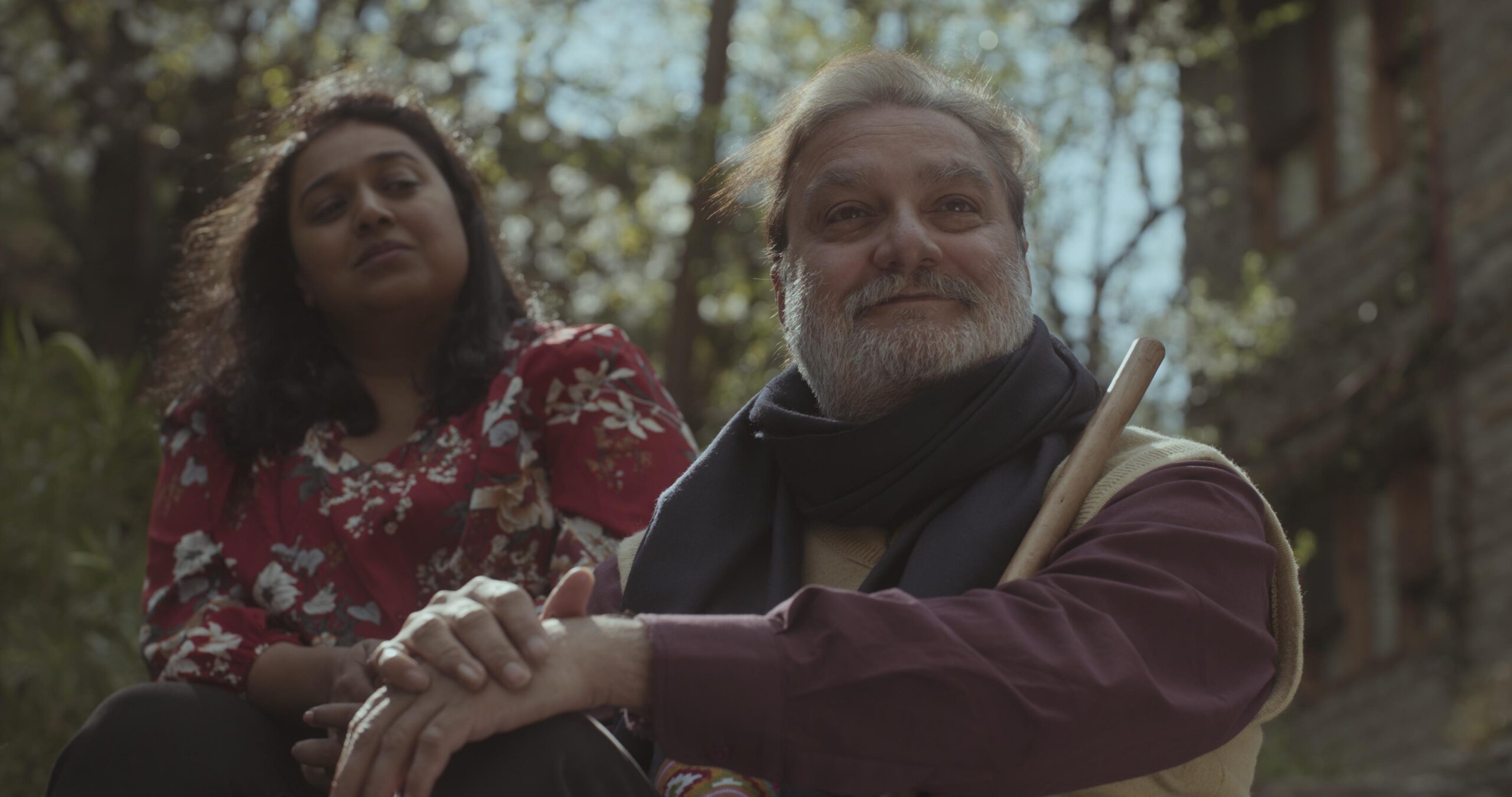
Performance-wise, Vinay Pathak lends Ved a calm, composed eeriness that proves deeply unsettling precisely because of its restraint. Rather than signalling menace overtly, Pathak allows it to simmer beneath a surface of quiet assurance, making Ved feel less like a conventional guide than an enigmatic custodian of moral passage. Namita Lal, as the soft-spoken and mysterious Malki, complements this with an equally controlled performance, her gentleness carrying an inscrutable gravity that suggests both comfort and quiet judgment. Together, they function less as mere caretakers than as spectral presences guiding the lost through an unsettling threshold. Among the three central figures, Shalmalee Vaidya brings emotional complexity to Sreemoi, a mother torn between her desperate desire to hold on to her daughter and the painful reality she must confront within herself. Rachita Arke, as Sam, embodies the burden of guilt with affecting precision, portraying an elder sister haunted by a youthful act born of jealousy. Her performance carries the weight of someone trapped by a single moral rupture that continues to reverberate through her consciousness. Aman Soni’s Beersha, meanwhile, is perhaps the film’s most visibly fractured presence as a man burdened not only by a heinous past but by a deeply unsettled sense of self, his discomfort extending even to his own name. Soni channels this instability into a performance marked by shame, defensiveness and suppressed anguish.
Boban James’s cinematography captures both the physical majesty of the landscape and the intimate emotional weather of its characters with remarkable sensitivity. His frames draw deeply from the local textures of the Himalayan setting — its vast silences, imposing terrains and spiritual stillness — while never losing sight of the fragile human anxieties unfolding within it. As editor, Anshul Tiwari maintains a measured rhythm that privileges stillness over momentum, allowing scenes the necessary space to breathe, unsettle and gradually reveal their deeper resonances. Maria Anna Foti Rossitto’s sound design heightens the eerie serenity and its surrounding wilderness, turning silence, wind and spatial emptiness into expressive elements of dread and introspection. Complementing this, Robyn Patrick’s music deepens the film’s spiritual and emotional textures without overwhelming them, offering a score that moves with a composed intensity through grief, unease and transcendence.
Bayaar is an austere and haunting meditation on guilt, memory and spiritual reckoning that confronts the uneasy weight of self-judgment with quiet conviction. In examining the fragile illusions through which its characters have understood their lives, it develops into a sombre reflection on redemption, suggesting that peace may arrive not through escape from the past, but through the courage to finally face it.
Bayaar recently had its UK premiere at the UK Asian Film Festival.