Words like “epic” and “immersive” are synonymous with the first two Avatar films. The kind of 3D experience worthy of a trip to the cinema. I remember when I first watched Avatar back in 2009, and credit to James Cameron for transporting me into the breathtaking world of Pandora. Not to mention Cameron’s ever-evolving pursuit of pushing the visual filmmaking technology to the next level, resulting in a one-of-a-kind cinematic experience like no other.
It would take him thirteen years later for the sequel, Avatar: The Way of Water, to overcome the skeptics and naysayers who claimed the Avatar franchise was hardly seen as part of a huge pop culture, unlike say, the Marvel Cinematic Universe. And while Hollywood has seen a significant change of how audiences’ tastes have evolved, for better or worse, in consuming media and their interests towards certain genres and IPs, the sequel did a tremendous box-office result anyway, which again, proved that one should never write off James Cameron.
Personally, his first two movies were more of a technical triumph in 3D visuals and big-screen spectacle, while the stories weren’t exactly his strongest suit, despite the world-building and expanding lore. Now, with the third movie — Avatar: Fire and Ash — is finally here, I wonder if the trend continues. The story picks up where we left off, as the death of Sully (Sam Worthington) and Neytiri’s (Zoe Saldaña) eldest son, Neteyam (Jamie Flatters), forces the family to deal with the loss. Revenge and a deep resentment towards the “Sky People” remain ingrained in the Sully family, particularly Neytiri, whose anger has since consumed her from the inside out.
The third movie significantly focuses on Spider (Jack Champion), the first human born on Pandora and has become part of the Sully family, despite Neytiri’s hatred against him being a sky person, and the fact that he’s the son of her enemy, Colonel Miles Quaritch (Stephen Lang). I wasn’t a fan of Spider, whose character comes across as an annoying boy trying so hard to find a sense of belonging in the Na’vi clan, and particularly, wanted to be accepted as a Sully family member. Spider may have been viewed as a complex character driven by his own dilemma, like how he was originally torn between his loyalty with the Sully family and his biological father, Quaritch, in the previous movie.
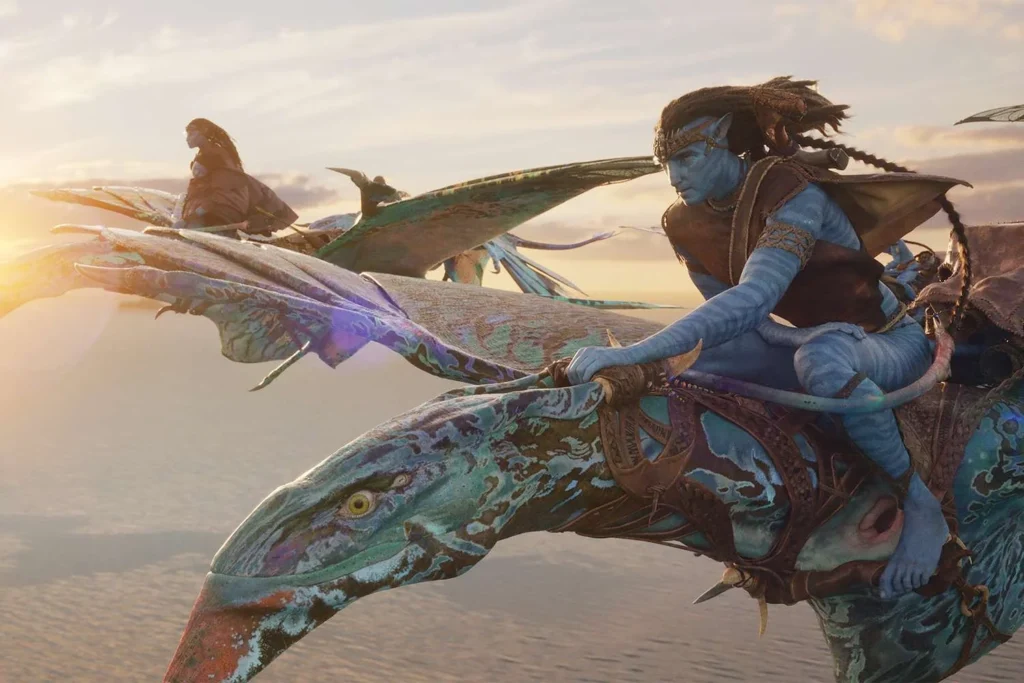
Now, in Avatar: Fire and Ash, Cameron wants to explore further on Spider’s arc and how his continuous existence would affect the Sully family. This is especially true with Sully’s decision to take Spider away for the sake of his safety, which doesn’t sit well with his children — Lo’ak (Britain Dalton), Kiri (Sigourney Weaver) and Tuk (Trinity Jo-Li Bliss) – who have grown attached to him. This, in turn, forces Sully to improvise by travelling together with Spider as one family aboard one of the airships belonging to Wind Traders, a nomadic clan led by their chief, Peylak (David Thewlis). The journey is originally planned to take Spider back to High Camp, both home and stronghold of the Omatikaya clan.
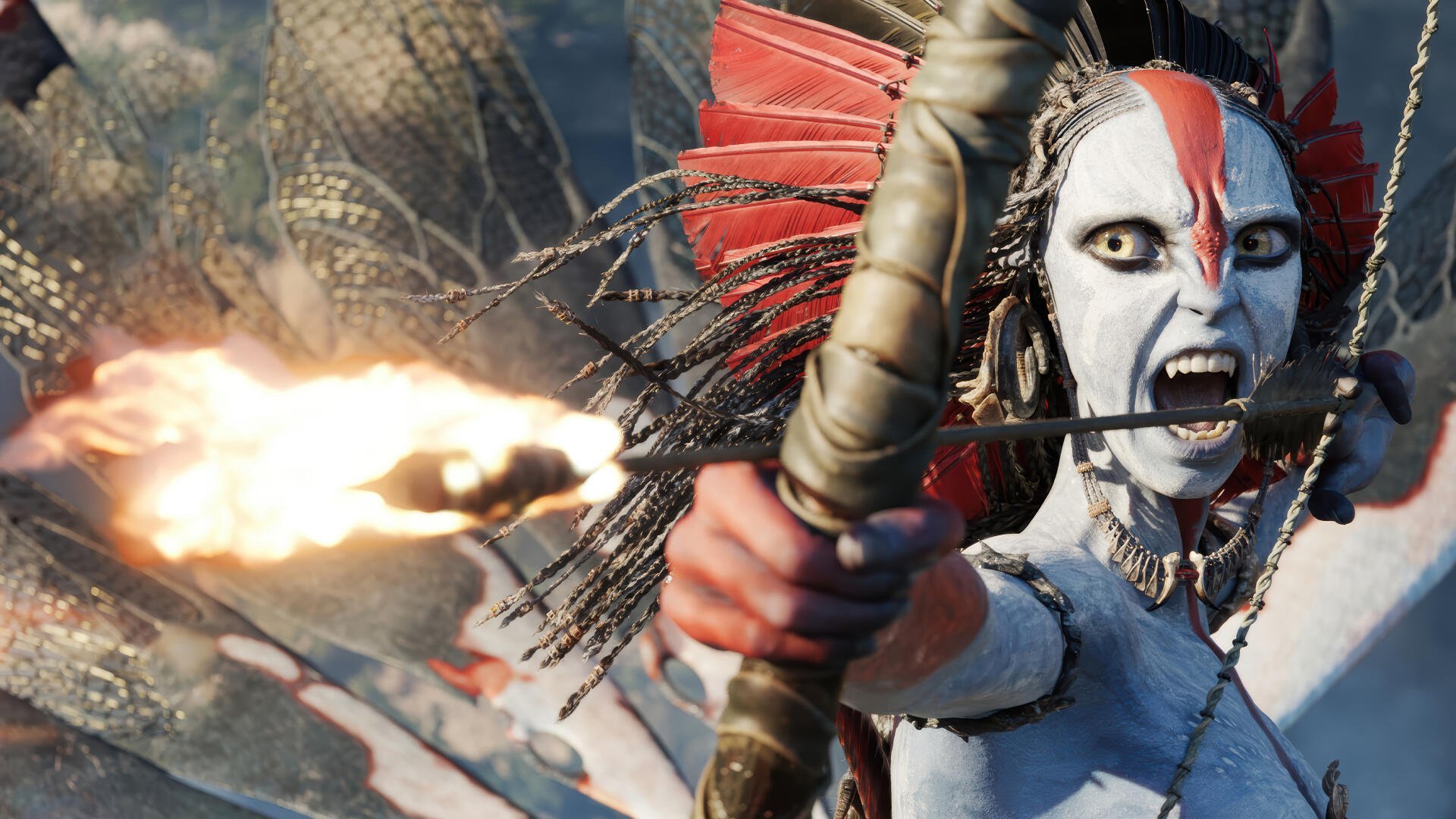
It doesn’t take long before Cameron is getting us excited with the first major action set-piece of Avatar: Fire and Ash – a mid-air ambush coming from Varang (Oona Chaplin) and her ruthless Mangkwan Clan, a.k.a the Ash People, as they launch an attack against the Wind Traders. As expected, the action is top-notch with the incredible 3D visuals pulls me deep into the experience of watching the large-scale battle unfolds. The combination of the dynamic camerawork, the sheer fluidity of its propulsive action sequence and the elaborate staging, which are all seamlessly put together with none of the eye strain or headache (if you wear a pair of glasses like me, you know what I’m talking about), experience it in 3D. Like the previous two Avatar films, it’s both visually seamless and captivating.
The result of the attack subsequently drives a sprawling narrative angle by splitting up some of the characters, namely Spider and the Sully family’s children, who are on their own to fend themselves against the persistent Ash People. Speaking of the Ash People, Cameron gives us one of the most memorable antagonists in his filmography in the form of Varang, whose menacing and unhinged personality is played to sinister perfection by Oona Chaplin. Her appearance even goes as far as stealing the show from everyone – easily one of the best things in Avatar: Fire and Ash, apart from the spectacular 3D visuals and thrilling action set pieces.
It has a better pacing too, and if only Cameron manages to keep up with a steady momentum, this third Avatar installment will bring together an overall great film. The rest of the movie is burdened by a heavy-handed storytelling with Cameron trying to push multiple story threads – think of how a series would normally do, and you’ll get the idea – into mini character arcs before connecting in the end. It does work, but only to a certain extent, with some scenes like the one revolving around Kiri and Spider suffers from a clunky exposition, while others are oddly repetitive. The latter is particularly evident with the story beats reminiscent of Avatar: The Way of Water, right down to the climactic been-there, done-that finale.
Despite the shortcomings, Avatar: Fire and Ash still delivers as a major blockbuster entertainment where the 3D visuals alone are worth the price of admission, even when the ambitious attempt at bringing together an encompassing storyline isn’t as strong as the meticulous technical achievement.