Ridley Scott’s much-anticipated feature-length return to the sci-fi genre – his first since 2017’s Alien: Covenant – combines the post-apocalyptic subgenre with survival thriller and Western tropes in The Dog Stars, adapted from Peter Heller’s acclaimed 2012 novel of the same name. But it’s not what you expect, especially given how Disney’s 20th Century Studios marketed the trailer like a gritty action-thriller blockbuster.
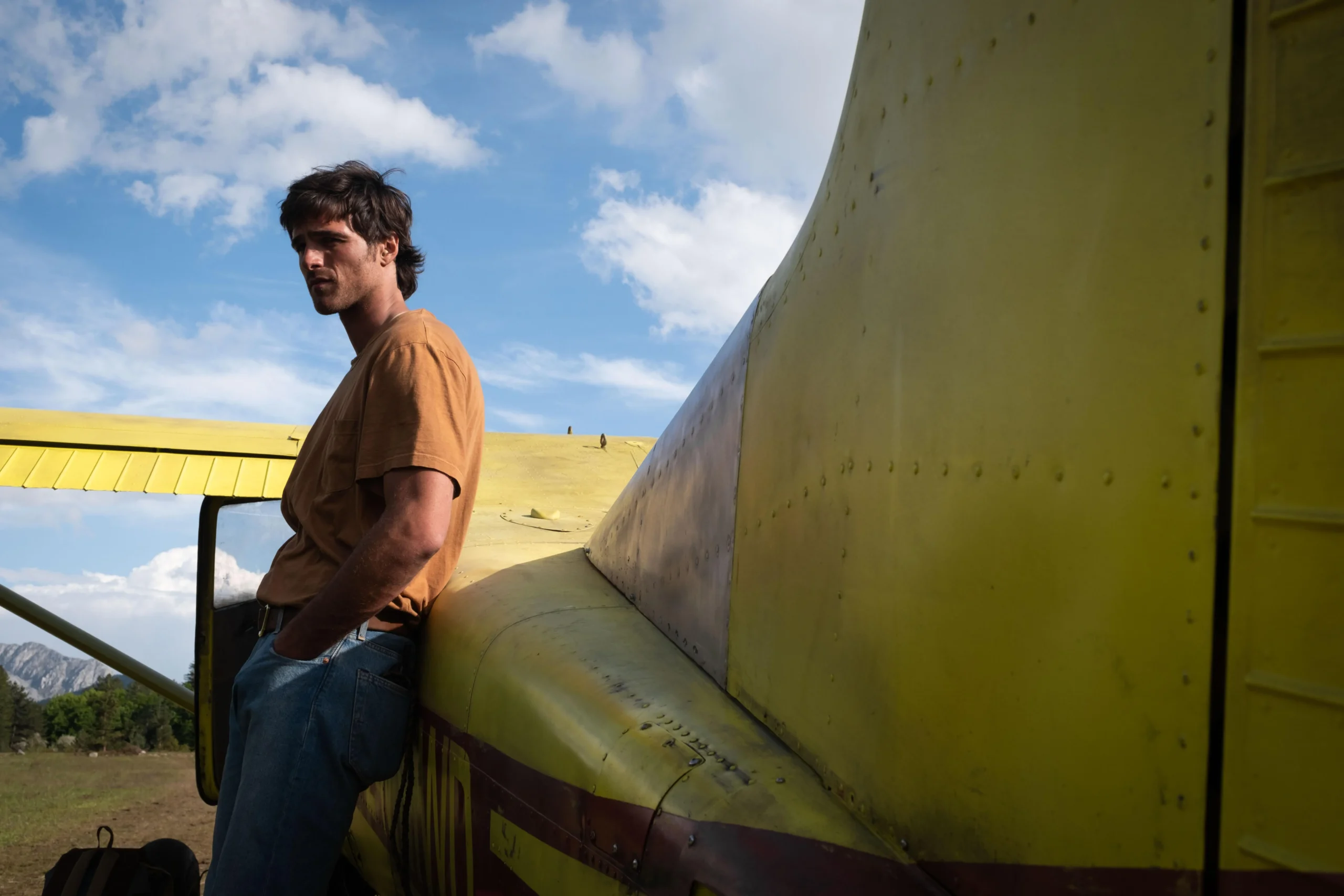
Instead, Scott and screenwriters Mark L. Smith (The Revenant, Twisters) and Christopher Wilkinson (Nixon, Ali) significantly toned down the familiar genre conventions in favor of a low-key, reflective storytelling that focuses more on the human drama. This may come across as a dull affair since Scott’s primary directorial strength lies in his visual direction. Surprisingly, The Dog Stars stays with me right from the start, first establishing Hig (Jacob Elordi) and his beloved dog Jasper’s routines, from flying the Cessna plane over the long-decrepit city – Denver, to be exact – to searching for food and other supplies, helping the isolated Mennonite community led by Aaron (Benedict Wong), and returning to his home where he and his late wife Melissa (Sai Bennett) used to live together.
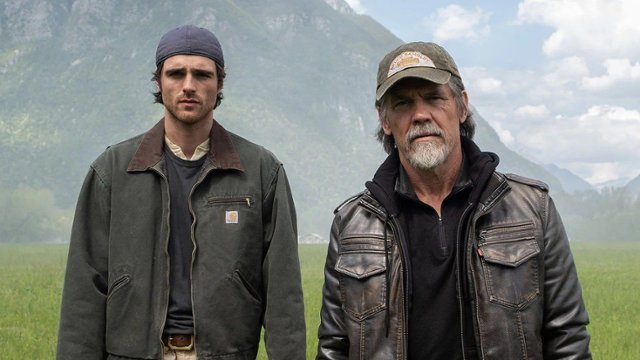
The pace is structured as a slow burn, taking its time to tell the story that wants us to immerse not only in the character-driven narrative but also in its desolate setting, plagued by a flu pandemic that has wiped out most of the human population. We learn that Hig is still grieving for his wife, but he’s far from giving up hope. He’s a firm believer that humanity still exists, but his friend – a former Marine named Bangley (Josh Brolin), who stands guard at their makeshift home in an abandoned airfield, complete with a lookout tower to prevent any intruders – is far more cynical by comparison.
The latter has the mindset of a polar opposite that’s unlike Hig’s deep sense of empathy and compassion – a realist who holds on to his strict rules of shoot-first, ask-questions-later survival. In other words, he won’t hesitate to pull the trigger and gun down the intruders the moment he spots them from afar heading towards their area. The contrasting personalities between Hig and Bangley keep me interested in the movie, watching these two actors from different generations bring respective gravitas to their roles, seen in Elordi’s soulful melancholy and Brolin’s grizzled presence.
The movie is also stunning to look at, especially when experiencing it on IMAX, thanks to Erik Messerschmidt’s atmospheric cinematography that captures the derelict, lived-in environment and the sweeping vistas of Hig’s plane hovering in the sky and the mountainside (reportedly shot in the Italian Alps and Dolomites, which served as stand-ins for the Colorado Rocky Mountains). As the story progresses, Hig soon decides to fly to the Grand Junction, believing there might be a civilization out there after receiving a faint radio signal, even though Bangley figures it’s a bad idea.
But for Hig, it was a risk worth taking, only for his flight to suffer a mid-air setback, causing him to land somewhere in the forest. From here, the movie zeroes in on the relationship between Hig and Cima (Margaret Qualley), a widow who has lost her husband and now lives with her rancher father, Pops (Guy Pearce), in the nearby farmhouse. Both Hig and Cima are broken souls longing for emotional connection, especially as Cima begins to warm up to him. But the movie makes a calculated move not to succumb easily to the usual Hollywood romance, preferring to let their on-screen chemistry flow naturally.
Cima’s father, however, doesn’t feel comfortable with a stranger like Hig showing up on his property, echoing Bangley’s similarly pragmatic nature. His deep-seated skepticism is justified at first, only for his initial hostility towards Hig to gradually change as he gets to know him better. Qualley’s beautifully earnest performance as Cima and Pearce’s gruff yet world-weary, overprotective father role as Pops bring solid support to the cast.
Scott doesn’t forget to level up the stakes whenever it’s necessary, showcasing his flair for visceral set pieces like the part where Brolin’s Bangley is all alone defending the home against a group of heavily tattooed, crazy intruders known as the Reapers, resulting in a one-man-army style filmed predominantly in night-vision cinematography. Except that the Reapers’ appearance is unfortunately relegated to nameless villains rather than making them the primary menace. The movie is equally notable for the invading armed bandits-on-horseback’s all-out attack against Hig, Cima, and Pops, an extended action sequence staged like an epic Western that doesn’t shy away from brutality and graphic violence.
Then comes the third act, which feels like it doesn’t fit the same picture, best described as tonally odd and surreal compared to the rest of The Dog Stars’ prominently somber and tender style. The introduction of an unhinged Allison Janney is fun to watch, but it would be better if her character belonged to a different movie altogether.