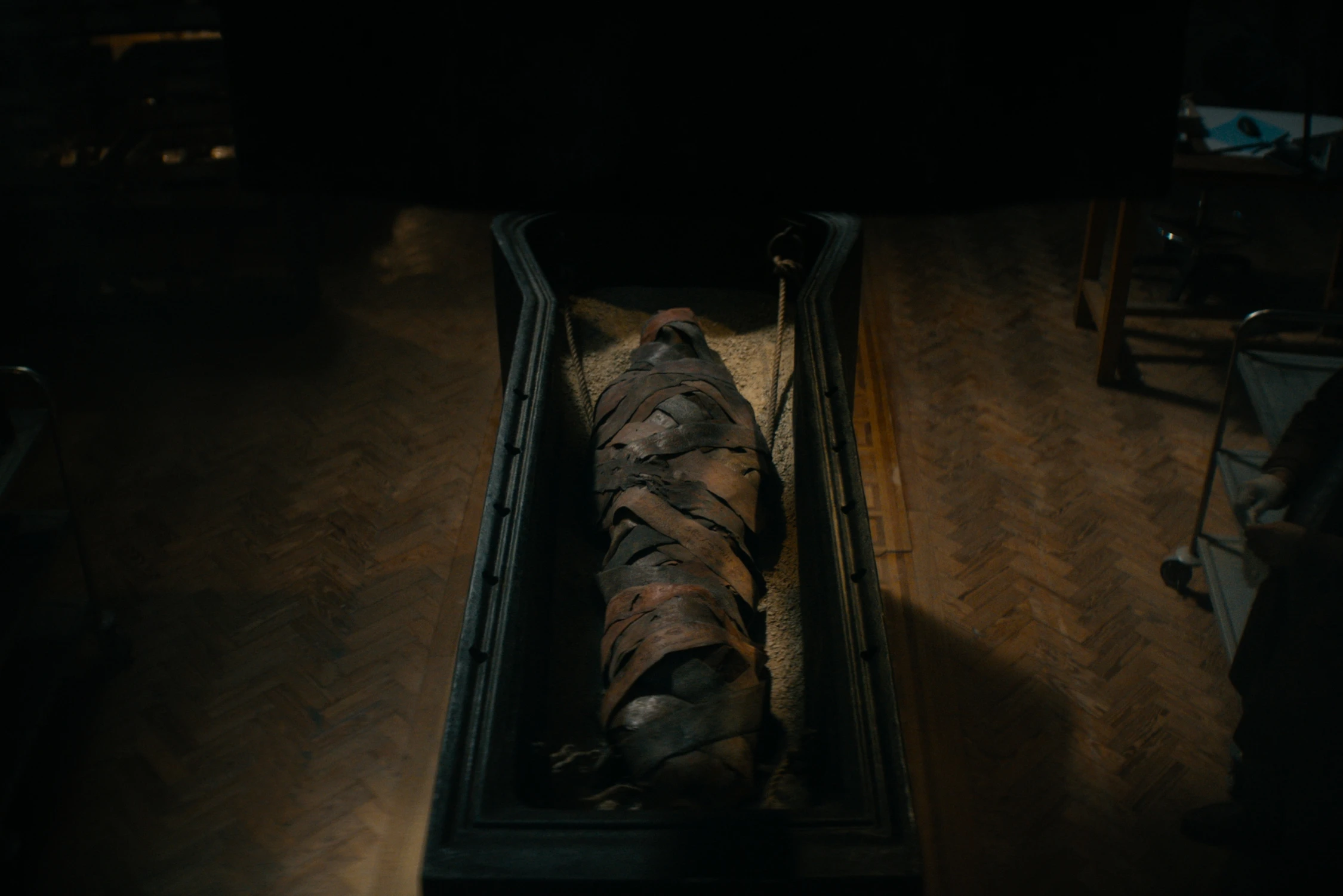
In Aadu 3, the latest installment in Malayalam writer-director Midhun Manuel Thomas’ Aadu franchise, the caper circus – after its signature three-hour oddball comedy – ends in an abrupt climax.
Just when things begin to thicken, Midhun’s director credit flashes across the screen, followed by a message. The audience is left waiting for the next part – if there is one – to find out what happened to Shaji Pappan and his screwball gang. What a fantastic disservice.
Ambition in world-building, franchise-building, and stretching the possibilities of a cash-cow brand is by no means a sin in show business. However, it is equally important to know how to end a film. Midhun, perhaps, is playing to the tune of recent Malayalam films that have taken a step further by teasing or announcing the next installment within the climax of the current one. It is also worth remembering that many such films have turned out to be box-office duds – Lijo Jose Pellissery’s Malaikottai Valiban being a case in point.
That said, Aadu 3 is, in many ways, a fitting piece of the franchise’s jigsaw. It comfortably sits within the template the series has milked over the years: a goofball gang gets caught up in a high-stakes situation. Through silly jokes, irreverent antics, and blissful ignorance, they manage to outwit tough adversaries.
The appeal of the earlier films can be traced back to the spirit of Malayalam’s oddball comedies from the 1990s, where the script leaned heavily into humor rather than heroism. In terms of repeat value, Aadu belongs to that lineage. Those films were almost an art form of their own, but the genre gradually faded post-2000, as Malayalam cinema moved toward noir-inspired, realistic, and cathartic storytelling influenced by Western cinema.
In Aadu 3, the narrative stretches across timelines, linking the past and the future while allowing characters to retain their quirks in a loosely constructed multiverse-like setup. Despite the expanded scope, the film manages to hold on to its core silliness. Midhun Manuel Thomas deserves credit for keeping the story grounded in its tone without losing itself in the scale of its ambition. The hyperlinking elements, in particular, work quite well.
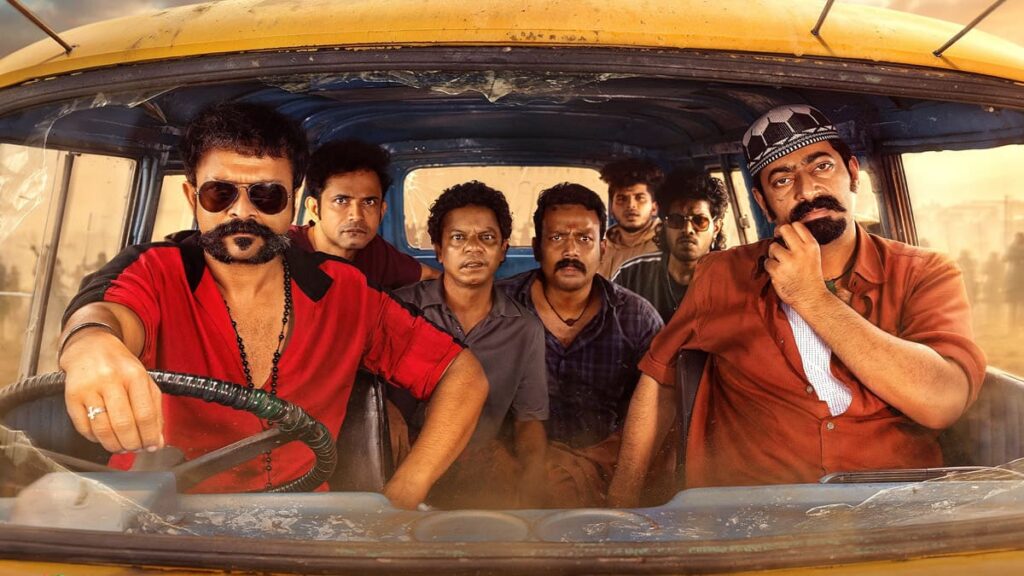
The humor, true to Aadu fashion, remains deliberately lame, forced, and silly. A few jokes land, but most fall flat – though fans won’t mind. Jayasurya maintains the rhythm of his role from the previous installments with ease, while Vinayakan, without a doubt, appears fully immersed in his character. There are only a few moments where his performance feels off or slightly cringeworthy. The rest of the cast, despite limited dialogue and exaggerated acting, manage to sustain the film’s pace convincingly.
Another notable performance comes from Dharmajan Bolgatty, who hogs more screen time than usual. Vijay Babu, despite faltering in some comedic beats, keeps the mood afloat. Saiju Kurup delivers a decent performance, and Indrans, as always, does justice to his role.
The screenplay remains tidy, even if it often leans into fan service. The WWE-style character themes and massy introductions work effectively in the first half. However, as the second half progresses, these elements begin to feel overbearing, especially when the audience is more invested in the story.
A significant shift in the Aadu universe is the introduction of a foreign antagonist. While Alleya Bourne is visually striking and brings a certain flair to the action, the character feels out of place in a franchise known for its inherently goofy villains. There is also an item song that adds little value and could have easily been omitted.
The climax, as expected in Aadu tradition, builds toward a chaotic fight sequence. However, this time it feels only half as effective as in previous installments. Just as the film approaches what could have been its most engaging and crucial stretch, Midhun does the unthinkable. Like abruptly changing a channel, he diverts the narrative to tease a fourth installment. It undoes what was otherwise a decent effort.
Aadu 3 definitely deserved a better ending. Thanks to Midhun’s unnecessary flourish, it ends up feeling like an unfinished film – one that had all the potential to be, or even become, a worthy addition to the Aadu folklore.