In Birds of War, Janay Boulos and Abd Alkader Habak turn the long arc of the Syrian civil war into something both intimate and quietly devastating. A love story conducted through messages, images, absences and belated reunions. Drawn from thirteen years of personal archives, the documentary resists the conventional grammar of war reportage. Instead, it adopts a fragmented, diaristic form that mirrors how history is now lived through the shadows of phones, voice notes, raw videos and uncertain connections.
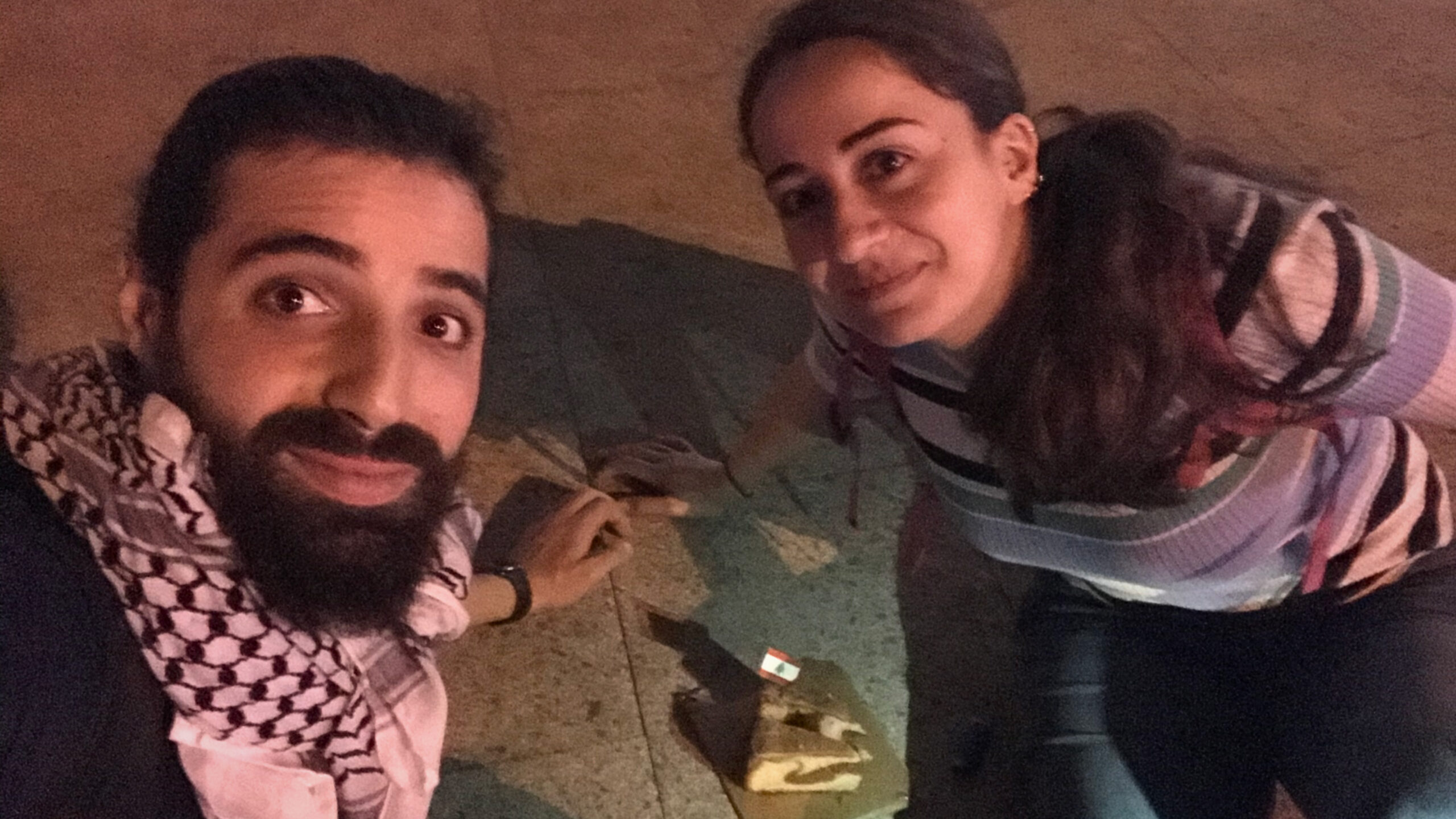
The film opens not with explosions or headlines, but with a text exchange between Habak and Boulos as he crosses the border into Turkey under cover of darkness, in precarious and threatening conditions. This immediately sets the tone of the documentary, signalling a narrative shaped by precarity rather than spectacle, and by fear and uncertainty as much as by intimacy. Boulos, a Lebanese journalist based in London and working with international broadcasters such as the BBC, is searching for reliable footage from Syria at a moment when foreign journalists are banned. Habak, a young Syrian activist and cameraman in Aleppo, is one of many on the ground filling the vacuum left by institutional journalism. Their early exchanges are strictly professional: requests, clarifications, editorial constraints. Yet embedded within these logistical conversations is a fragile trust, built across distance and danger, that slowly deepens.
What distinguishes Birds of War from many documentaries about Syria is its refusal to separate the political from the personal. The war is never reduced to background context, but neither is it aestheticised as spectacle. Instead, it intrudes repeatedly and brutally into the protagonists’ lives, shaping their choices and circumscribing their futures. Habak’s footage, often shaky, rushed, incomplete, carries the weight of necessity rather than polish. These are images captured not for posterity but for survival, and question the ethics of a media system that demands images of suffering while remaining insulated from its consequences.
The documentary’s emotional centre lies not in declarations of love but in small, practical decisions shaped by politics. As Syria sinks deeper into devastation and Lebanon endures its own political and economic collapse, the couple’s communication reflects on what has been lost—homes, certainties and professional identities. It also contemplates what, improbably, has been gained. Love here is neither redemptive nor triumphant. It is precarious, negotiated and repeatedly deferred, yet it persists within history rather than in defiance of it. As their working relationship gives way to intimacy, the film traces two parallel trajectories of disillusionment. Boulos grows uneasy with journalism’s claims to objectivity when those claims rely on others absorbing the danger, while Habak, facing the fall of Aleppo, confronts the limits of resistance and the personal cost of staying. Their exchanges via text, voice notes and intermittent video calls become a space where professional roles dissolve into shared fear, longing and eventual commitment. The film also does not shy away from politics, exposing how Russian forces and the Assad regime invoke the presence of Islamist groups to justify the bombing of civilian areas, even where no military targets exist.
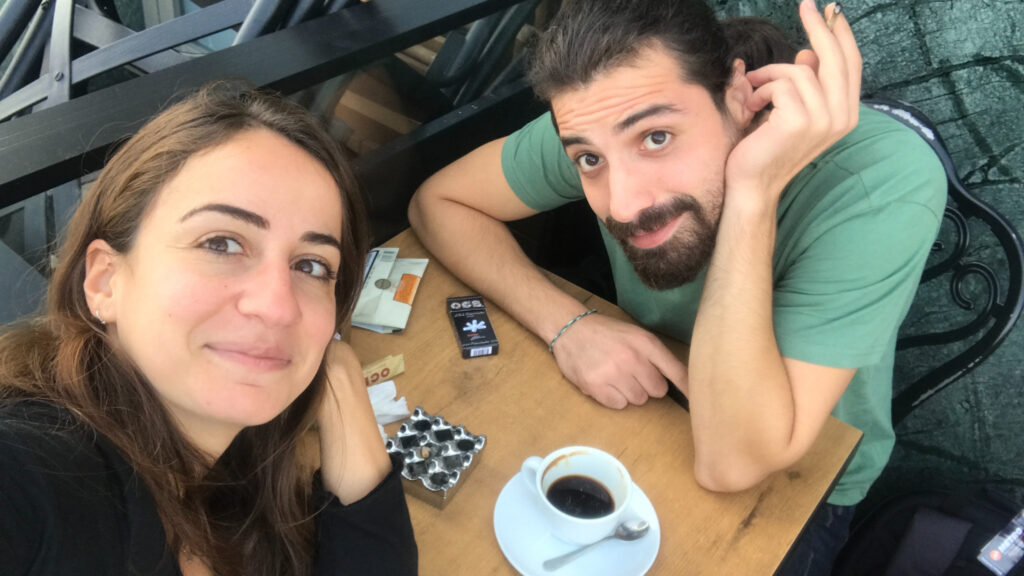
Habak and Boulos’s story echoes countless relationships strained or forged under comparable conditions of displacement and violence. The title itself suggests both fragility and resilience: creatures capable of flight, yet constantly threatened by forces beyond their control. In this sense, the film is as much about exile as it is about war—about the slow unmooring of identity when one’s relationship to place becomes provisional. There is also a quiet self-reflexivity running through the film. By foregrounding their own relationship, Boulos and Habak invite uncomfortable questions about authorship, power and representation. Who tells whose story? At what cost? Rather than resolving these tensions, the documentary allows them to remain visible, lending it an ethical gravity.
Formally, Birds of War is constructed almost entirely from personal archives of messages scrolling across screens, distorted audio clips, home videos and fragments of news footage. Such material could easily have felt monotonous or indulgent, but editor Will Hewitt, with additional editing by Tanya Singh, shapes it with a precise sense of rhythm that allows emotional force to accumulate. Images of the ghastly aftermath of airstrikes and rocket attacks—bloodied, chaotic, unresolved—are set against intimate, even tender exchanges between Habak and Boulos. This stark contrast causes time to stretch and contract, mirroring the lived experience of exile and prolonged waiting. The effect is immersive without being manipulative, allowing the viewer to inhabit uncertainty rather than merely observe it. Indeed, the careful juxtaposition of images shapes the narrative with the coherence and emotional pull of fiction, without ever betraying its documentary truth.
Birds of War is less a chronicle of events than a study of endurance. It understands that wars are not only fought on frontlines but lived in inboxes, across time zones, in the fragile hope that a message will arrive, that a voice will answer. By anchoring vast geopolitical upheavals in the evolving relationship between two individuals, the film reframes war and displacement through lived experience. It reminding us that behind every image of conflict lies a network of lives, loves and compromises that rarely make the news
Birds of War is screening in the World Cinema Documentary Competition at this year’s Sundance Film Festival.