Josephine serves as a profound meditation on the fragility of youth, meticulously stripping away the noise of the adult world to focus on the internal tremors of its eight-year-old protagonist. Directed with a surgical yet deeply empathetic hand by Beth de Araújo, the film doesn’t just ask us to observe a tragedy; it forces us to inhabit the skin of an eight-year-old who has seen the world break before she even learned how to navigate it. Instead of leaning on easy sentiment, the film offers a stark, unflinching look at the paralysis that grips a family when the parents realize that no amount of love can shield a child from a memory they cannot erase. If there was any doubt on the power of an independent film, this film just oozes with it.
The story begins in the deceptive peace of an early morning. The air is crisp in San Francisco’s Golden Gate Park as Damien (Channing Tatum), a father focused on discipline and athletic rigor, runs soccer drills with his eight-year-old daughter, Josephine (played by a phenomenal Mason Reeves). The camera work here is vital; it captures the mundane beauty of the park before the world pivots. When Josephine wanders off for just a few moments, she witnesses a brutal sexual assault. It is a sequence handled with extreme directorial care, focusing not on the voyeurism of the act, but on the frozen, uncomprehending terror of the child watching it. The brilliance of the direction lies in this perspective; we aren’t given a sensationalized view of the crime, but rather the fragmented, terrifyingly confused viewpoint of a child whose reality has just been irrevocably altered.
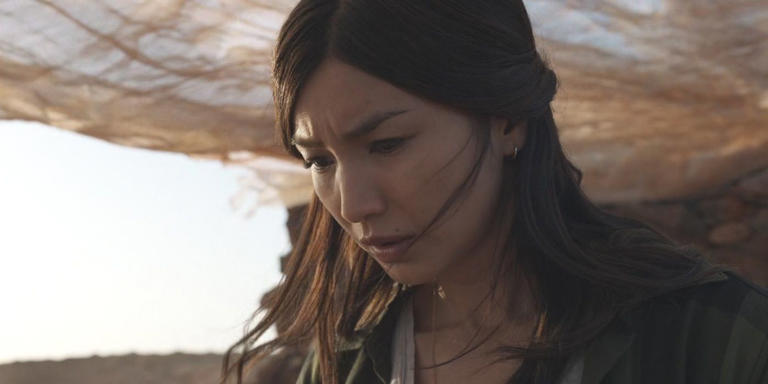
Damien manages to catch the attacker, but the movie shows that catching the “bad guy” doesn’t end the nightmare for the witness. The story focuses on how helpless the parents feel as they realize they don’t know how to explain such a terrible crime to an eight-year-old. Channing Tatum gives a quiet, powerful performance as a father crushed by guilt because he couldn’t protect his daughter in time. He tries to “fix” things by being tough, which clashes with Claire (Gemma Chan), who plays the mother with a steady, quiet sadness. While Damien pushes for resilience, Claire struggles to find the right words to reach a daughter who is slowly pulling away from them both.
The core of the film’s power lies in Josephine’s behavioral shift. Mason Reeves carries the film with a revelatory performance, moving from a bubbly athlete to a withdrawn, haunted shell. We see her trauma manifest in the schoolyard—a place that should be safe but now feels like a minefield. Her confusion turns to a dangerous, quiet withdrawal as she struggles to process what she saw. The film evokes the atmosphere of a psychological drama as she begins to “see” the perpetrator lurking in the shadows of her own home. It is a masterclass in subjective filmmaking, where the camera often adopts her low-angle perspective, making the world of adults seem towering, distant, and ultimately powerless to undo what has been done.
Visually, the film is a triumph. Cinematographer Greta Zozula uses a palette that shifts from the vibrant, saturated greens of the park to the cold, sterile blues of the courtroom and the heavy, claustrophobic shadows of the family home. The score by Miles Ross provides a sonic heartbeat to Josephine’s internal panic, echoing the disorientation of a child whose sense of safety has been permanently revoked. Every frame is composed to heighten the sense of isolation Josephine feels, even when she is surrounded by people who love her. The use of sound is particularly effective, often muffling the dialogue of adults to emphasize Josephine’s feeling of being trapped within her own mind.
The emotional weight of the film is carried by three remarkable performances. Channing Tatum delivers an exceptional performance as a dad standing up for what he thinks is the right thing to do. Gemma Chan delivers an equally mesmerizing performance as a month unable to even talk to her child normally as both parents are trapped in different kinds of grief. However, the film truly belongs to Mason Reeves. Discovered by the director, Mason gives a hauntingly natural performance as Josephine. She uses her silence and a sharp, observant gaze to show the deep confusion of a child trying to make sense of a broken reality. Beth de Araújo who also wrote the script for the film from her personal experience ensures that the film never wanders too far from Josephine’s internal reality. The filmmaking was just a pure masterclass in directing and Beth did an incredible job.
Josephine is a vital, albeit challenging, piece of cinema. No frame was unnecessary, no scene was too long, everything was just about right which was fantastic to watch. It is a film that demands empathy and rewards the viewer with a profound understanding of the resilience of children and the limitations of the people who protect them. It serves as a stark reminder that the loudest screams are often the ones kept inside, and that healing is not a destination, but a long, jagged road. By the time the credits roll, you aren’t just thinking about the crime; you are thinking about the incredible strength required for a child to reclaim her world. It is a haunting, heart-wrenching study of stolen innocence that will stay with you long after you leave the theater. This is independent cinema at its finest and at its very peak.
Josephine is screening in the U.S. Dramatic Competition at the 2026 Sundance Film Festival.