Independent Indian cinema in 2025 has revealed itself not through grand declarations but through a quieter consistency of approach. Across languages and regions, filmmakers have shown a renewed commitment to lived experience, moral uncertainty, and attentive observation, resisting the pull of instant relevance and neatly packaged meanings. Rather than striving for emphasis or resolution, these films allow ambiguity, silence, and duration to shape their emotional and political contours. What links them is less a shared subject or aesthetic than a common temperament. There is a reluctance to overstate, a scepticism towards easy redemption, and an understanding that cinema’s deepest force often emerges from what it chooses not to articulate.
All the ten films listed here had their world premieres at international film festivals this year, where they stood out not as curiosities from the margins but as works in conversation with global independent cinema. What distinguishes them is not scale or novelty, but precision: of framing, of performance, of ethical inquiry. They ask difficult questions about labour, faith, inheritance, gender, ecological precarity, and the fragile dignity of ordinary lives, without announcing those questions too loudly.
For Talking Films, this listicle is less a ranking than a constellation of ten films that, taken together, suggest where independent Indian cinema is quietly but decisively heading. They are works that trust the audience, that allow time to do its work, and that reaffirm cinema as a space for attentive looking rather than emphatic instruction.
The films are listed alphabetically by their international titles and are not ranked in any particular order.
Cactus Pears (Sabar Bonda, Marathi)
Rohan Parashuram Kanawade’s Sabar Bonda (Cactus Pears) resists the familiar consolations of identity-driven cinema. Where such films often seek instant empathy, Kanawade adopts a quieter, more exacting gaze. Lyrical yet firmly rooted, the film observes masculinity, family, and desire with an unforced clarity, refusing both melodrama and moral instruction. Its achievements lie in understatement. Emotional truth emerges not through declaration, but through duration, proximity, and silence.
The film opens with Anand (Bhushan Manoj) and his mother Suman (Jayshri Jagtap) waiting in a hospital after the death of his father. They return to their ancestral village for the mourning period, where Anand must navigate familial scrutiny, particularly questions about marriage, with polite evasiveness. Relief arrives in the form of Balya (Suraj Suman), a childhood friend now struggling as a farmer. As their bond rekindles, the film gently traces a deepening intimacy shaped as much by restraint as by longing.
Kanawade’s unhurried pacing and pared-down narrative allow everyday gestures, shared silences, casual conversations, moments of physical closeness to carry emotional weight. The performances are naturalistic and quietly moving, with Bhushan Manoj and Suraj Suman sharing a tender, unshowy chemistry. Vikas Urs’s restrained cinematography and the film’s carefully layered soundscape by Anirban Borthakur and Naren Chandavarkar ground the drama in lived experience rather than symbolism. It is a film of rare sensitivity, one that trusts the audience to listen closely to what remains unsaid.
Sabar Bonda World premiered at the Sundance Film Festival, and became the first Indian film to win the Jury Prize in World Cinema Dramatic Competition category.
Don’t Tell Mom (Kannada)
World premiering at the Busan International Film Festival in the Windows on Asian Cinema section, Don’t Tell Mother announced Anoop Lokkur as a filmmaker of moral tact and emotional intelligence, attentive to the politics embedded in private life.
Don’t Tell Mother follows nine-year-old Aakash, whose experience of corporal punishment at school leaves scars he quietly conceals from his parents. What begins as a child’s private ordeal unfolds into a melancholic family drama, attentive to vulnerability, endurance, and the damage caused by unspoken pain. Set in 1990s Bangalore, the film evokes a pre-digital world shaped by shared routines of music on Walkmans, WWF wrestling on television, bedtime stories, and family dinners unmarred by screens. It is also a time when corporal punishment is normalised, borne in silence by children and tacitly upheld by adults.
Lokkur anchors the film in intimate, everyday gestures. Aakash’s bond with his younger brother Adi is expressed through acts of care of saving chocolates, shielding one another from reprimand, sharing favourite snacks that form the film’s emotional backbone. These moments of tenderness stand in contrast to a harsher environment of academic pressure, intimidation, and authoritarian discipline at school and home alike.
The adult world mirrors this quiet repression. Aakash’s mother longs for independence stifled by domestic expectation, while his father remains deferential within a rigid family hierarchy. Lokkur observes these parallel silences with empathy, suggesting how repression circulates across generations. Shot with unforced naturalism and guided by restrained performances, Don’t Tell Mother is an assured debut that is patient, humane, and deeply attentive to the tremors of ordinary life.
In Search of the Sky (Vimukt, Hindi)
Jitank Singh Gurjar’s Braj-language debut Vimukt (In Search of the Sky) is a quietly devastating inquiry into the slow violence of poverty and the humiliations that accrue through endurance rather than catastrophe. Set in rural western Uttar Pradesh, the film follows Jasrath, a brick-kiln labourer, his wife Vidya, and their differently abled son Naran, whose vulnerability exposes the cruelties a community prefers to normalise or spiritualize.
Gurjar resists sentiment and spectacle. Daily life is rendered through unadorned routines, work, gossip, ritual, within a society quick to moralise deprivation and monetise despair. Neighbours propose pilgrimage as a cure for the supposed sins of past lives, young men mock with impunity, and kin quietly turn upon kin. When the family finally sets out for the Kumbh Mela, the journey is not staged as transcendence but as reckoning, a weary convergence of faith, exhaustion, and muted hope, where belief offers no easy absolution.
What distinguishes Vimukt is its attention to small gestures such as the dignity with which Vidya cares for her son, the gradual erosion of Jasrath’s restraint, and Naran’s unguarded innocence. The film’s late, largely wordless stretch edges toward expressive excess, yet its uncertainty feels earned, reflecting a consciousness still unsettled rather than redeemed.
World premiering in the Centrepiece section at the 50th Toronto International Film Festival, Vimukt went on to win the NETPAC Award, marking Gurjar as a filmmaker of moral seriousness and rare restraint.
The Elysian Field (Ha Lyngkha Bneng, Khasi)
Set in the Khasi Hills in 2047, The Elysian Field observes a handful of villagers bound not by blood but by a shared fidelity to a land on the brink of abandonment. There is no dramatic upheaval here, only the patient rhythms of staying, of caring, remembering, and enduring in the face of erasure.
The film opens with an extended, wordless passage mourning the death of Belinda, whose absence hangs heavily over both her husband and the nearly deserted village. Silence becomes expressive, allowing grief to register as a collective condition rather than a personal tragedy. With no conventional conflict or antagonist, the narrative unfolds as a meditation on memory, loss, and solidarity. Even death, when it returns midway, does not tip the film into despair, instead, it reinforces the dignity of shared presence.
Kurbah and co-writer Paulami Dutta shape a world marked by quiet egalitarianism where men and women sharing space without hierarchy, desire articulated without shame, power failures serving as gentle metaphors for fragility and neglect. Pradip Daimary’s restrained cinematography and the film’s subtle sound design, by Sumir Dewri, Saptak Sarkar, and Sayantan Ghosh, deepen its contemplative mood. Anchored by an ensemble of unshowy performances, The Elysian Field stands as Kurbah’s most formally assured work to date. It is a film that finds emotional resonance not in transformation, but in the quiet insistence of remaining.
World premiering at the Moscow International Film Festival, where it won Best Film, Best Director, and the NETPAC Jury Prize, The Elysian Field situates itself within a lineage of contemplative cinema that values ethical patience over narrative closure.
Pinch
In Pinch, Maitri abandons a promising career abroad to pursue life as an aspiring travel vlogger. She lives with her widowed mother Shobha in a crowded apartment complex. When Shobha insists she join a religious pilgrimage during Navratri, Maitri sees an opportunity to generate content for her struggling YouTube channel. The journey takes a darker turn when their landlord, Rajesh, gropes Maitri. Her refusal to stay silent, and her impulsive act of retaliation, sets off a chain reaction that exposes the fragile moral economy of the community.
Uttera Singh, as director and lead actor, crafts a darkly comic portrait of everyday complicity within middle-class life, where politeness and social convenience mask quiet violence. Set largely within confined spaces, Pinch transforms shared corridors and overheard conversations into a tense moral theatre. Neighbourly warmth quickly gives way to judgment and exclusion, as defiance is punished and misconduct normalised under the guise of harmony.
Pinch resists easy resolutions. It is less a tale of victory than an unsettling study of how ordinary lives absorb, rationalise, and live with inconvenient truths. It is a film that understands how power often operates through repetition rather than spectacle, and how cinema, in turn, can make those repetitions visible without raising its voice.
Pinch had its world premiere in the Best International Narrative Feature section of the Tribeca Film Festival and its Asian premiere at the ongoing International Film Festival of India.
Secret of a Mountain Serpent (Saanp, Sapne, Tum aur Main, Hindi)
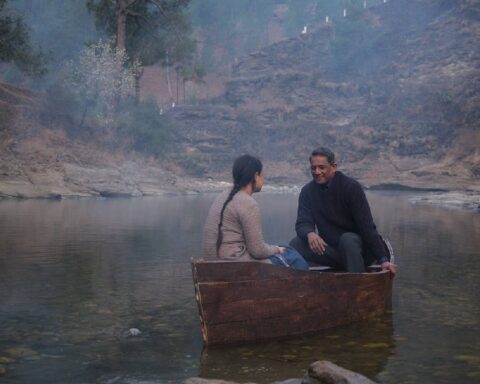
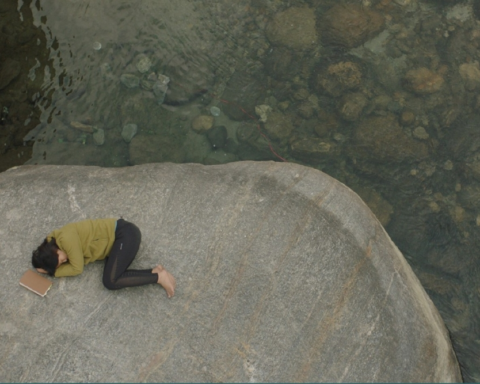
Nidhi Saxena’s Secret of a Mountain Serpent is a film of hushed intensities, attentive to the interior lives of women shaped by absence, waiting, and inherited unease. Set in the Kumaon hill town of Almora during the late-1990s Kargil conflict, it observes a community where men are largely away on military duty, leaving women to manage domestic life alongside quieter, unarticulated longings. At its centre is Barkha , a schoolteacher whose husband is posted at the border, and whose emotional equilibrium is gently unsettled by the arrival of Manik Guho , a visiting engineer and writer.
Saxena avoids narrative urgency, allowing the film to unfold through associations rather than plot. Apples on branches, a serpent coiling around a woman’s leg, and a river forbidden to women by local lore recur as symbolic threads, linking personal desire with myth, memory, and social constraint. The uncanny is never forced. It seeps quietly into the everyday, reflecting how fear and longing coexist within routine.
Vikas Urs’s restrained cinematography and Niraj Gera’s finely modulated sound design sustain a sense of emotional suspension, while Salman Alvitigala’s editing respects the film’s unhurried rhythm. Performances by Trimala Adhikari, and Adil Hussain remain controlled and inward, allowing feeling to emerge through gesture and silence. Secret of a Mountain Serpent ultimately offers a patient meditation on desire and displacement, attentive to what remains unsaid, unseen, and unresolved.
After premiering at this year’s Venice International Film Festival, the film went on to win the ‘New Voice Award’ at the Bangkok International Film Festival.
Shadow Box (Baksho Bondi, Bengali)
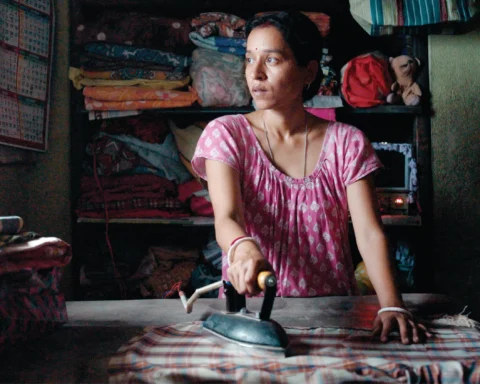
Shadow Box, the debut feature by Saumyananda Sahi and Tanushree Das, is a sober, unsentimental portrait of a figure central to Indian domestic life yet rarely examined with such rigour: the self-effacing mother and wife. Set in suburban Barrackpore, the film follows Maya , a woman whose days are consumed by the labour of cleaning homes, ironing clothes, working on a chicken farm in order to keep her family afloat. Her husband Sundar , an ex-army man suffering from PTSD, drifts between withdrawal and self-destruction, while their teenage son Debu negotiates adolescence amid shame, loyalty, and quiet despair.
Sahi and Das resist melodrama, allowing hardship to register through accumulation rather than incident. Maya’s sacrifices are neither celebrated nor pitied; they are treated as structural facts, shaped by class, gender, and a social order that offers little room for refusal. Moments of remembered promise such as a school trophy, a fleeting smile, briefly illuminate the distance between who Maya once was and who she has been forced to become.
Shot with austere clarity and shaped by an unadorned soundscape, Baksho Bondi remains attentive to interior life without offering easy consolation. It asks whether endurance is a choice or a condition, and leaves the question deliberately, and unsettlingly, open. Performances by Tillotama Shome, Chandan Bisht, and Sayan Karmakar add a quiet, penetrating gravity, rendering the family’s struggles with understated intensity. It allows the film’s moral and emotional ambiguities to resonate long after the final frame.
Shadow Box premiered in the Perspectives competition at this year’s Berlin Film Festival.
Shape of Momo (Chhora Jastai, Nepali)
Shape of Momo is a quietly observant debut, attentive to the everyday negotiations through which women learn to live with, resist, or reframe inherited structures of power. Set in rural Sikkim, Tribeny Rai’s debut follows three generations of women sharing a household, each shaped by a different relationship to patriarchy, absence, and compromise.
Bishnu , newly returned from Delhi, brings the confidence, and impatience,of an outsider, pressing for change that unsettles both her family and the village’s fragile equilibrium. Her mother practises quiet diplomacy, valuing survival over confrontation, while her pregnant sister Junu, economically and emotionally dependent, navigates circumstance with greater fragility. Their bedridden grandmother waits for a son who may never return. Together, they form a generational prism in which womanhood appears less as identity than as condition shaped by duty, restraint, and deferred desire.
Rai avoids melodrama, allowing tensions to surface through routine interactions and unspoken discomforts. Male authority hovers largely off-screen, yet its effects are pervasive—in advice offered, futures imagined, and limits quietly enforced. Bishnu’s guarded interactions with men, including a tentative romance, sharpen the film’s central inquiry: how does one assert autonomy in a world where harmony is prized over justice? The performances by the three principal women characters—Gaumaya Gurung, Pashupati Rai, and Shyama Shree Sherpa—anchor the narrative, rendering the generational and social pressures they navigate both palpable and profoundly human.
Shape of Momo premiered at the Busan International Film Festival in the Asian Vision section, where it received two awards. At the 31st Kolkata International Film Festival, it was awarded Best Film in the Indian Language category.
Tiger Pond (Vaghachipani, Kannada)
Natesh Hegde’s Vaghachipani (Tiger’s Pond), which premiered at the Berlin International Film Festival, in the Forum section, marks a confident and clarifying step forward from his debut Pedro. Adapted from Amaresh Nugadoni’s short story Dhare Urridhe, the film examines caste, power, and moral corrosion with an unhurried, pitiless calm.
Set in a seemingly placid village on the brink of local elections, the narrative centres on Prabhu , a wealthy landlord whose authority is enforced through fear, loyalty, and silence. His younger brother Venkati, his henchman Malbari, a migrant from Kerala, and a restive lower-caste challenger, Basu, form a network of dependence and resistance within a rigid hierarchy. When Pathi, a mute shepherdess living under Prabhu’s roof, is found pregnant, the village’s latent violence surfaces, exposing the mechanisms through which power protects itself.
Hegde resists easy moral binaries. No one here is innocent. Even acts of defiance are compromised by self-interest or desperation. Women, particularly Pathi and Devaki, bear the heaviest cost, their suffering absorbed into ritual, rumour, and resignation. The film’s restraint, its long takes, muted performances, and attentive soundscape, allows oppression to reveal itself not through spectacle, but through routine.
Vaghachipani is a work of quiet devastation, mapping how injustice persists less through cruelty than through consent, habit, and fear. It confirms Hegde as a filmmaker with an exacting eye for the moral weather of everyday life.
White Snow
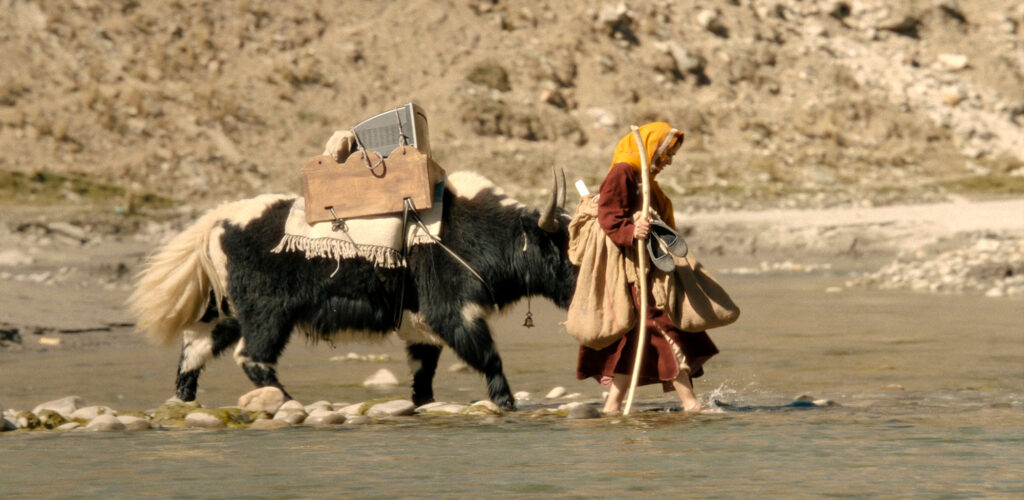
Praveen Morchhale’s White Snow offers an understated yet quietly devastating meditation on how art unsettles authority, and on the private costs borne by those who refuse silence.
In an unnamed village in Kashmir, a short film made by young Ameer is banned after a cleric objects to its depiction of postpartum blood. Branded subversive and arrested on spurious charges, Ameer disappears into the system. His mother, Fatima, responds not with protest but persistence, setting out across mountain villages with a television and DVD player strapped to a yak, determined to screen her son’s film wherever she can.
By withholding precise geography, Morchhale loosens the story from the specificity of Kashmir, suggesting a wider pattern in which power fears even the smallest artistic gesture. Officials speak casually of revolution, exposing the paranoia that governs censorship. Yet the film’s attention remains fixed on modest acts of defiance. A teacher who cannot screen the film quietly offers help, a village without electricity listens as Fatima narrates the story, and strangers recognise their own lives in a work they may never see.
The film moves at the pace of Fatima’s journey, slow, spare, attentive to fatigue, silence, and terrain. Madhu Kandhari’s performance is resolutely inward, her endurance expressed through gesture rather than speech. Mohammad Reza Jahanpanah’s restrained cinematography reinforces a world where fear circulates softly, and resistance survives through patience.
White Snow ultimately argues that expression need not be loud to be dangerous, and that perseverance, quietly enacted, can outlast authority. It had its world premiere at this year’s São Paulo International Film Festival and was recently screened at the Jogja-NETPAC Asian Film Festival.
Notable Mention: Ghich Pich
Set in 1990s Chandigarh, Ghich Pich, the directorial debut of Ankur Singla, is a finely observed study of adolescent restlessness and the quiet fault lines within middle-class families. The film builds its drama from the smallest gestures, allowing disputes and dissensions to accumulate with an unforced, almost casual rhythm. Rather than leaning on overt conflict, Singla trusts behaviour, pauses, and half-spoken grievances to do the narrative work.
The performances carry an authentic immediacy, especially in their handling of youthful bravado and vulnerability. The acute observational details, and everyday rituals, ground the film in a world that feels both precisely rendered and emotionally familiar. Singla’s gaze is notably non-judgemental. He does not chastise his young characters for their mistakes or rebelliousness. Instead, he approaches them with empathy, suggesting that confusion and defiance are not moral failures but necessary stages of becoming.
With its theatrical release in India in August, Ghich Pich emerges as a work of quiet confidence. It speaks of teenage yearning and nascent selfhood with clarity and restraint, finding lasting force not only in dramatic revelation but also in the recognition of shared human uncertainty.