Taika Waititi has become something of a divisive filmmaker in recent years, with his more recent efforts failing to win over audiences in quite the same way as earlier successes like Jojo Rabbit and Thor: Ragnarok. His latest feature, Klara and the Sun, sees him adapting the bestselling novel by Kazuo Ishiguro, bringing a sci-fi story about humanity, connection and artificial intelligence to the big screen. Jenna Ortega (Wednesday) stars as Klara, an Artificial Friend designed to combat loneliness who finds herself in the home of a teenage girl named Josie (Mia Tharia) and her family, hoping to bring some light into their lives as they grapple with loss. With a vibrant world, decent performances and a story that clearly has its heart in the right place, Klara and the Sun has the makings of something rather special. Unfortunately, it struggles to say anything particularly new or compelling, whilst its misguided humour becomes increasingly exhausting by the time the credits roll.
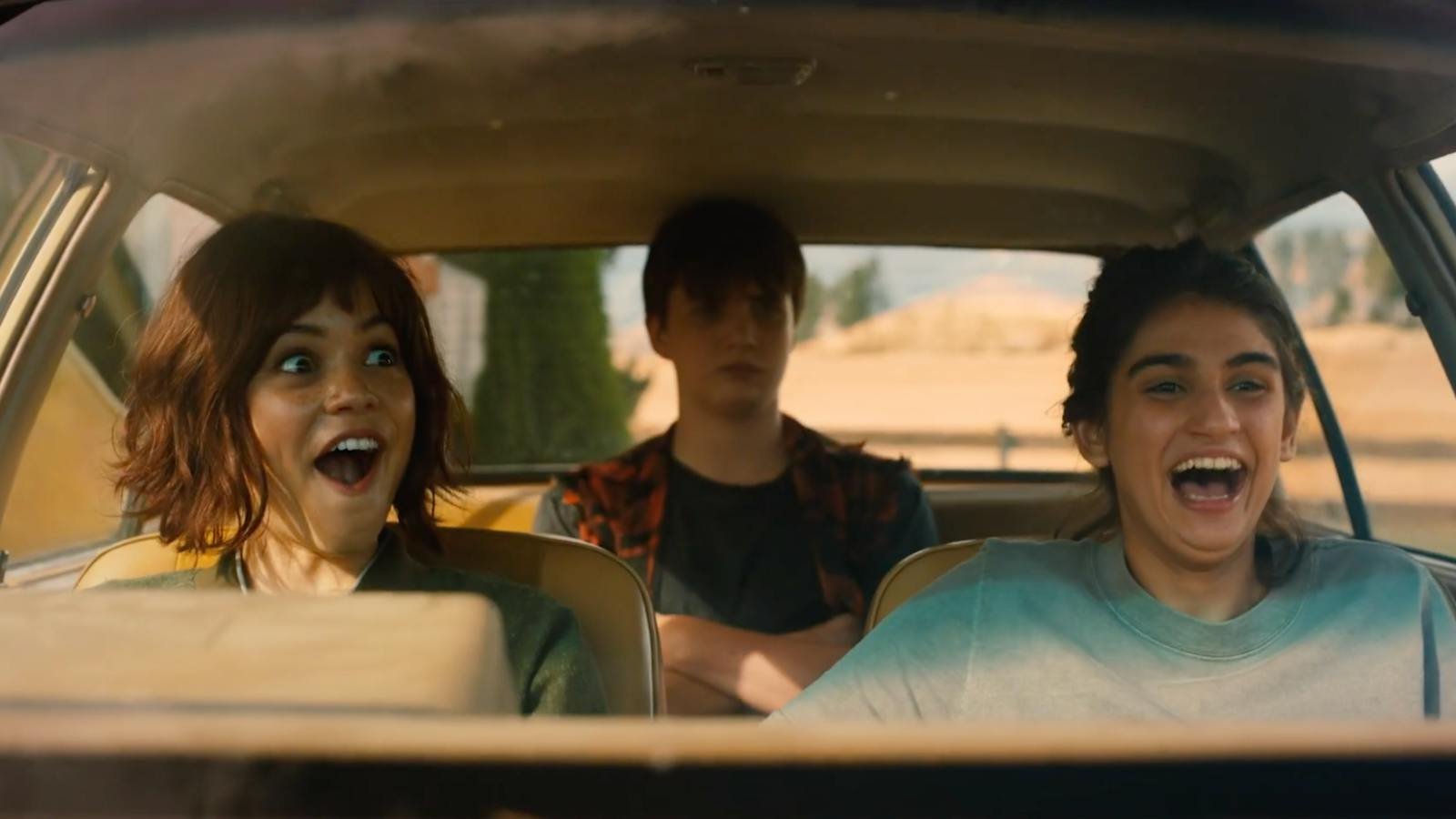
At first glance, Klara and the Sun is a solid watch. The first act invites us into a vibrant, colourful world through the eyes of Klara, an Artificial Friend whose purpose is to provide companionship and meet the needs of her human owner. When she is chosen by the sweet-natured Josie, the two quickly become friends, enjoying the opportunity to explore the world through each other’s eyes. Josie’s home provides much of the film’s setting, with its vast wheat fields and bursts of colour creating a distinctive backdrop that helps the film stand out. It also does a good job of establishing its futuristic world without overcomplicating things, introducing the setting and its rules in a straightforward yet effective way. It’s a charming start, with an immersive setting, a likeable friendship beginning to blossom and plenty of warmth to draw you in.

Unfortunately, Klara and the Sun begins to unravel as the runtime progresses, with too many Taika-isms stripping away the intricacy of the ideas explored in Ishiguro’s bestselling novel. Where the book delves into humanity and what it truly means to be human, the film simplifies things considerably, focusing largely on friendship and grief. There’s certainly something to sink your teeth into here, but the result is far less complex or thought-provoking than its source material deserves. Waititi’s humour is also very hit and miss, with one scene in particular involving a party threatening to derail the entire film. It feels so out of touch with the rest of the story that the tonal shift is difficult to ignore, and it’s a shame to see such a potentially moving narrative undermined by jokes that simply don’t land. Klara’s quirky charm can only carry things so far, and as the film progresses, its central ideas become increasingly repetitive. By the time it reaches its third act, there’s little left to explore, with the story becoming rather bland and tiresome just when it should be building towards something meaningful.
Whilst some members of the cast aren’t used as effectively as they could be, the performances aren’t to blame for Klara and the Sun failing to fully come together. Ortega is good as the titular Klara, balancing the robotic nature of an Artificial Friend with a genuine eagerness to learn about the world and a quirky charm that makes her easy to warm to. Amy Adams (Arrival) isn’t given a great deal to work with, but she impresses regardless, whilst Aran Murphy (Lola) is sweet enough as Josie’s love interest, Rick. The real standout, however, is young Mia Tharia as Josie, a teen girl dealing with grief, a complicated relationship with her mother and ongoing health issues. It’s a role that asks quite a lot of Tharia, but she handles the emotional demands well, bringing a vulnerability to Josie that makes her a strong counterpart to Ortega’s curious, artificial companion. Steve Buscemi (Pulp Fiction) is also there, not that you’d realise if you blink at the wrong time. There’s plenty of talent on display here, even if the material doesn’t always give the cast the opportunity to shine.
Klara and the Sun is a frustratingly middle-of-the-road adaptation, with a vibrant world and some strong performances let down by a story that loses much of the depth and complexity of its source material. Jenna Ortega and Mia Tharia make for a likeable pairing, and there are moments of genuine warmth, but Waititi’s misguided humour and an increasingly repetitive narrative prevent the film from reaching its full potential. There’s a good story buried somewhere beneath it all, but the ideas at its heart never receive the attention they deserve, leaving the final act feeling rather flat. There’s enough here to make it an agreeable watch, but Klara and the Sun ultimately struggles to offer anything particularly memorable or thought-provoking.